Professional Roof Inspection Guide for Riverbend Homeowners
Your roof is the critical barrier between your Riverbend home and Illinois’ unpredictable weather, making proactive assessment essential for protecting your structure and investment.
This guide details exactly what you need to look for to recognize when service is necessary, outlines the thorough process a professional uses to evaluate your entire system, and clarifies how experts determine the remaining service life of your current materials. You will also learn to distinguish between cosmetic issues and structural compromises, understand the financial components of inspection costs, and gain a framework for deciding between targeted repairs versus a full replacement.
Discover the essential steps to securing reliable, long-term protection for your property starting with a meticulous evaluation.
Recognizing the Signs Your Roof Needs an Inspection
Living in the Riverbend area means your home is constantly at the mercy of unpredictable Illinois weather. From humid summers to freezing winters, these temperature swings cause roofing materials to expand and contract, leading to wear and tear that isn’t always visible from the driveway.
If you haven’t had a professional look at your shingles in over a year, or if your neighborhood just weathered a significant storm, it is time to check for damage. High winds and heavy hail are common culprits for roof repair needs in our region, often leaving behind “hidden” issues that worsen over time.
The Red Flag Checklist: What to Look For
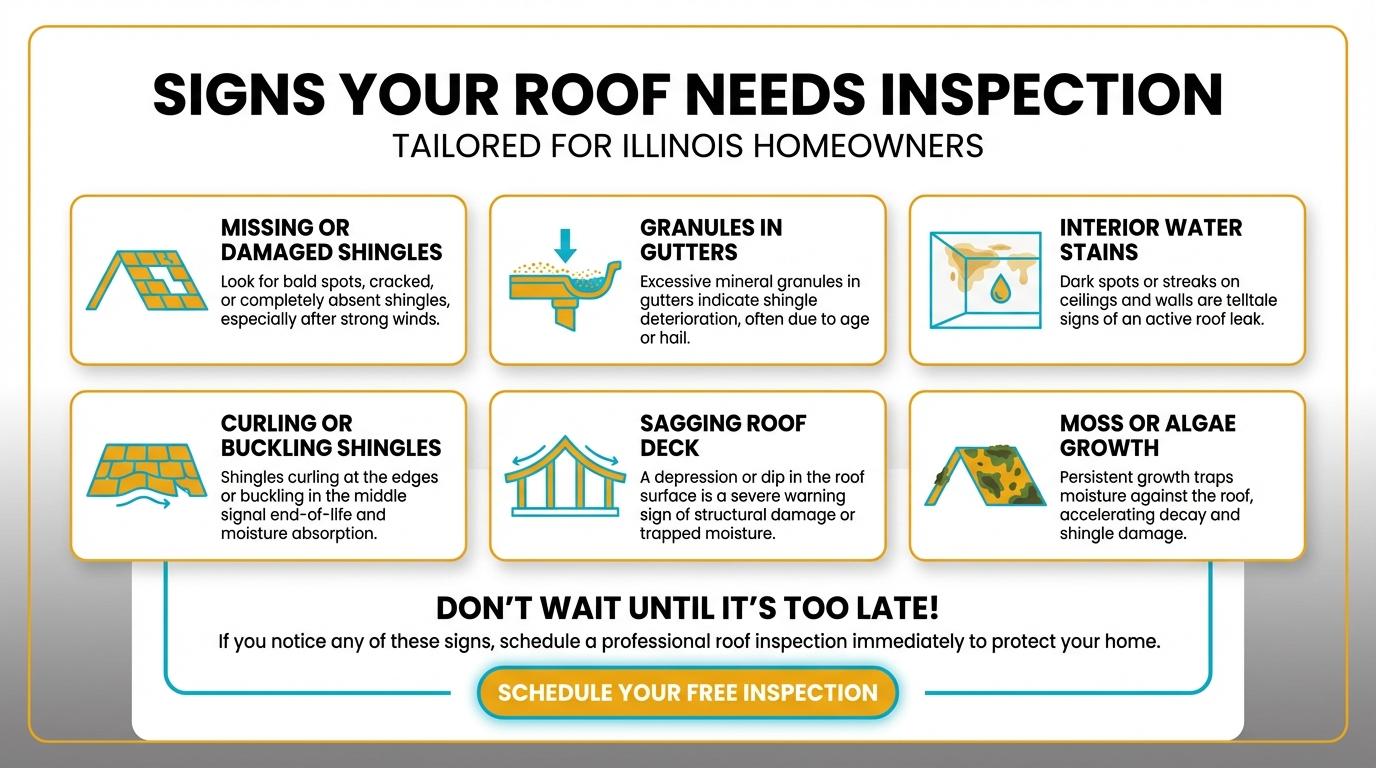
Before small leaks turn into major headaches, keep an eye out for these specific roofing red flags:
- Granule Loss: Check your gutters for what looks like coarse black sand. These granules protect your shingles from UV rays; without them, the asphalt becomes brittle and cracks.
- Curling or Buckling Shingles: Shingles that turn upward at the edges or look “wavy” are no longer shedding water effectively.
- Dark Water Stains: If you see streaks on your ceiling or dark spots on the underside of your roof deck in the attic, moisture is already getting past your barriers.
- Missing or Damaged Shingles: High Illinois winds can easily peel back tabs, especially on older roofs.
- Cracked Flashing: The metal around chimneys and vents is a common point of failure. If the sealant is dried or the metal is rusted, water will find its way in.
Post-Storm Damage Checks
Illinois storms can be brutal, often bringing hail that “bruises” shingles. Unlike a missing shingle, hail damage looks like small, dark indentations that can be hard to spot from the ground. After a severe weather event, look for:
- Dented Gutters or Downspouts: If the metal gutters are dented, there is a high probability your shingles took a hit too.
- Splattered Lead Jacks: Check the soft metal pipes on your roof; hail often leaves visible “pockmarks” here.
- Debris in the Yard: Large branches or pieces of siding on the ground are clear indicators that your roof needs a closer look.
Preliminary Self-Inspection Guide
You don’t need to climb a ladder to perform a basic check. Stay safely on the ground and use a pair of binoculars to scan your roofline.
- Check the “Valleys”: Look at the areas where two roof slopes meet. This is where the most water flows, and it’s often the first place to leak.
- Inspect the Chimney: Look for loose bricks or gaps in the flashing.
- Scan for “Bald Spots”: Look for areas where the texture of the shingle looks different, indicating heavy granule loss.
If you notice any of these signs, don’t wait for a leak to start dripping through your ceiling. You can schedule a free inspection with a local expert to get a documented report on the health of your home’s exterior. Taking action early can often mean the difference between a simple patch and a full roof replacement.
The Standard Residential Roof Inspection Process
A professional roof inspection is much more than a quick glance from the driveway. It is a comprehensive health check for your home’s primary defense system. At Trill Roofing, we believe in a “top-down, bottom-up” approach, ensuring that every component—from the peak of your gables to the floor of your attic—is functioning exactly as it should to keep your family dry and safe.
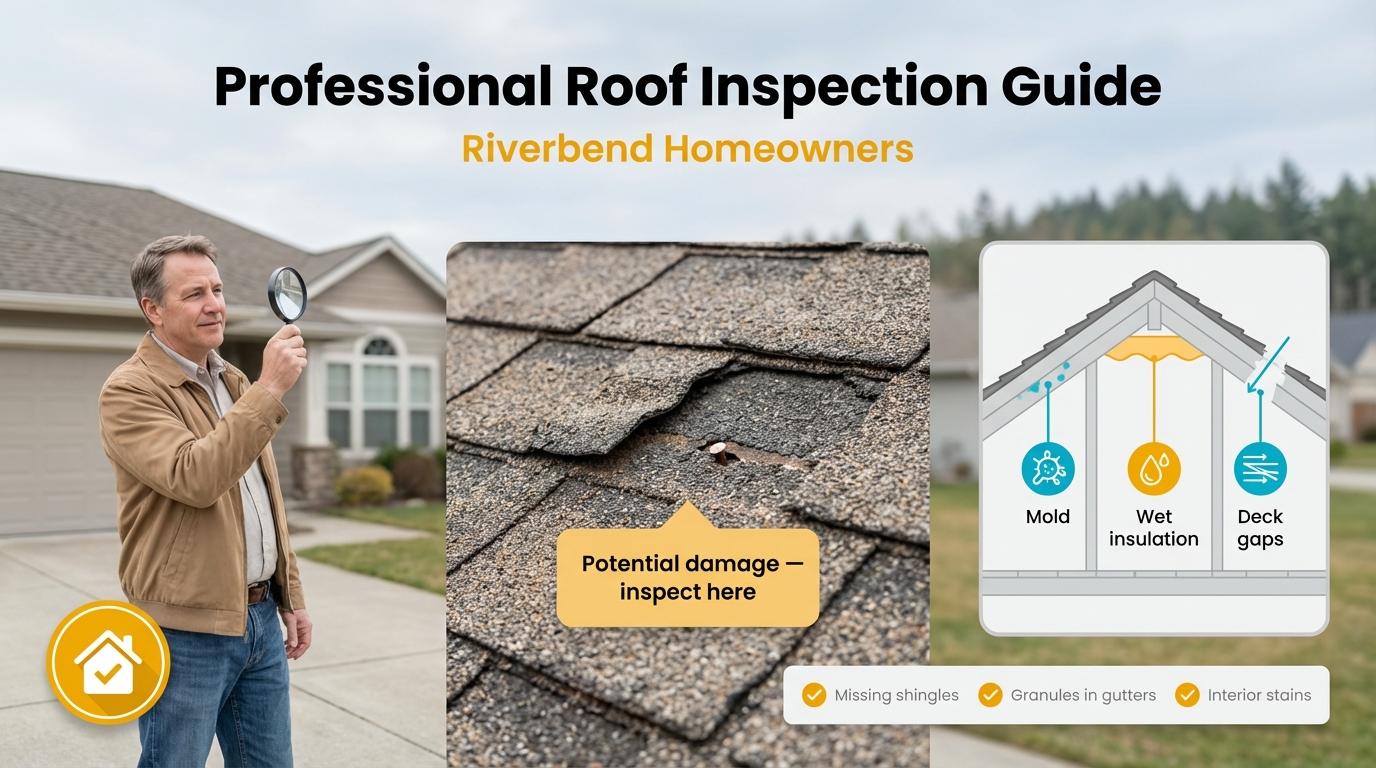
Step 1: Shingle and Surface Analysis
The first thing we look at is the “skin” of your roof. We aren’t just looking for signs of roof damage like missing shingles; we are looking for the subtle indicators of aging and wear.
- Granule Loss: We check your gutters and downspouts for excessive “sand,” which indicates the shingles are losing their protective UV coating.
- Physical Deformation: We look for curling, buckling, or “fish-mouthing” shingles that are no longer laying flat.
- Impact Damage: Especially in the Riverbend area, we look for the tell-tale circular bruises left by hail.
Step 2: Flashing and Penetrations
Leaks rarely start in the middle of a shingle; they start at the joints. We inspect the flashing—the metal transitions around chimneys, dormers, and valleys. We also check the “boots” around plumbing vents to ensure the rubber hasn’t dry-rotted, which is a common cause of mysterious ceiling stains.
Step 3: Gutter and Drainage Evaluation
A roof is only as good as its ability to shed water. We examine your gutter system to ensure it isn’t pulling away from the fascia board or sagging. Improper drainage can lead to water backing up under your shingles or, worse, saturating the soil around your foundation.
Step 4: The Attic and Ventilation “Deep Dive”
This is the part many homeowners overlook. We head into the attic to look for:
- Daylight: Seeing sun peeking through the roof deck is a clear sign of a hole.
- Moisture Stains: Dark spots on the rafters or insulation indicate slow, hidden leaks.
- Ventilation: We ensure your intake and exhaust vents are clear. Without proper airflow, your attic can reach temperatures over 150 degrees, literally “cooking” your shingles from the inside out.
Siding and Trim Inspection
While we are up there, we also examine your siding and trim. Your roof and siding work together as a single “envelope.” If your siding is cracked or the trim around your roofline (the fascia and soffit) is rotting, it can allow moisture to bypass your roofing system entirely. As a full-service contractor in the Bethalto area, we look at these elements to ensure your entire exterior is watertight.
Inspection Documentation List
At the conclusion of our visit, you shouldn’t be left wondering what we found. A professional inspection should always result in a clear paper trail. You will receive:
- A Comprehensive Photo Log: High-resolution images of every issue found, so you don’t have to climb a ladder to see the damage yourself.
- A Detailed Condition Report: A written summary of the estimated remaining lifespan of your roof.
- Itemized Repair or Replacement Estimate: A transparent, line-by-line breakdown of costs if work is required.
- Insurance Documentation: If the damage is storm-related, we provide the specific documentation and measurements your insurance adjuster will need to process a claim.
Evaluating Your Roof’s Condition and Remaining Lifespan
Determining the health of your roof involves more than a quick glance from the driveway. Professional inspectors use expert grading methods to categorize a roof’s condition, typically ranging from “Good” (performing as intended) to “Critical” (active failure occurring). During a comprehensive roof inspection, we look for a combination of structural integrity, installation quality, and material degradation.
To understand where your roof stands, you can refer to NRCA Homeowner Resources for industry-standard maintenance guidelines. If your roof is consistently showing the signs below, it may be nearing the end of its functional life.
Physical Signs of Aging and Wear
When assessing asphalt shingles, it is crucial to distinguish between different types of surface failure. Many homeowners confuse the two, but they indicate different stages of decay:
- Granule Loss: This is the physical erosion of the ceramic-coated sand particles on the shingle surface. You will often find these “crumbs” in your gutters. While some loss is normal, excessive shedding exposes the underlying asphalt to UV rays, which accelerates rot.
- Brittleness: Unlike granule loss, which is surface wear, brittleness is a chemical change. As the essential oils in the asphalt evaporate over time, the shingles become stiff and “glass-like.” Brittle shingles will crack or snap when lifted slightly, meaning they can no longer expand and contract with Illinois’ shifting temperatures.
Other Common Warning Signs:
- Curling or Cupping: Shingle edges turning upward or centers sinking.
- Bald Spots: Areas where granules have completely worn away, leaving the black asphalt substrate visible.
- Cracking: Horizontal or vertical fissures caused by thermal shock.
- Moss and Algae Growth: While often cosmetic, heavy moss can trap moisture against the shingles, leading to premature rot.
Estimating Remaining Service Life
The remaining service life (RSL) of your roof depends heavily on the material type and local weather patterns in the Riverbend area. While a professional roof replacement is the only way to “reset” the clock, knowing these factual lifespans helps you plan your home maintenance budget.
| Roofing Material | Typical Factual Lifespan | Factors Affecting RSL |
| :— | :— | :— |
| 3-Tab Asphalt Shingles | 15–20 Years | High wind exposure, attic ventilation quality. |
| Architectural Shingles | 25–30 Years | Multi-layered thickness provides better UV resistance. |
| Metal Roofing | 40–70 Years | Fastener maintenance and coating integrity. |
| Slate or Clay Tile | 50–100+ Years | Weight-bearing capacity of the home’s structure. |
If your asphalt roof is over 20 years old, even if it looks “okay” from the ground, the internal chemical bond of the shingles is likely compromised. A detailed inspection can confirm if you have five years left or if the next major storm could cause a significant failure.
Uncovering Hidden Damage Beneath the Surface
While surface issues like missing shingles are obvious, many roofing problems remain invisible from the ground.
Subtle punctures from fallen debris or failed sealants around vents can allow water to seep slowly into your home.
These “hidden” leaks cause extensive damage that a standard roof inspection is designed to catch early.
The Attic Check: Mold and Daylight Indicators
A thorough inspection must move from the roof’s exterior to the attic to see what the shingles are hiding.
For Riverbend homeowners, performing a daylight check is a crucial diagnostic step during the day.
Switch off all attic lights; if you see “pinholes” of light or sunbeams, your roof has structural gaps.
[insert photo of sunbeams coming through roof decking in a dark attic here]
If light can get through, water and pests can certainly follow, especially during heavy Illinois rainstorms.
In these cases, you likely need a professional roof repair to seal the breaches.
Additionally, look for mold growth or dark, damp stains on the rafters and insulation.
Musty odors in the attic are often the first sign of a slow leak that has been brewing for months.
In our humid climate, trapped moisture leads to wood rot and hazardous mold colonies if not addressed.
Assessing Decking Integrity
The roof decking is the wooden foundation that supports your entire shingle system.
During a professional roof inspection, contractors check for soft spots or “spongy” sections in the wood.
If the decking feels flexible underfoot, it usually indicates that moisture has compromised the wood’s strength.
If the decking is rotting, it can no longer hold roofing nails securely, causing shingles to blow off easily.
Replacing damaged decking is a standard part of a high-quality roof replacement.
This provides a stable, flat surface that ensures your new roof stays weather-tight for decades.
Deciding Between Roof Repair and Full Replacement
When you discover damage after a roof inspection, the biggest question is always: “Can I just fix this, or do I need a whole new roof?” Making the right choice involves balancing your current budget against the long-term health of your home.
In the roofing industry, we often point to the 25% Rule. This is a general guideline used by contractors in the Riverbend area to help homeowners decide. If more than 25% of your roof is damaged, missing shingles, or showing signs of failure, a repair is often just a temporary “band-aid.” At that point, the cost of labor and materials for multiple repairs starts to approach the cost of a new system, making a full install the more financially sound move.
Repair vs. Replacement: At a Glance
The following table breaks down how to weigh your options based on the scope of damage and your long-term goals:
| Factor | Roof Repair | Full Replacement |
| :— | :— | :— |
| Cost | Lower upfront cost for immediate fixes. | Higher initial investment, but better long-term value. |
| Longevity | Extends the current roof life by 1–5 years. | Provides a fresh start for 20–50 years. |
| Damage Scope | Minor issues affecting less than 25% of the roof. | Extensive damage or wear exceeding 25% of the area. |
| Aesthetics | May result in “patchwork” look with mismatched shingles. | Ensures a uniform appearance and high curb appeal. |
| Warranty | Typically covers only the specific area repaired. | Includes full manufacturer and workmanship warranties. |
When Localized Repairs Make Sense
Not every leak requires a total overhaul. If your roof is relatively young and the damage is isolated, localized repairs are the way to go. This usually applies to scenarios like:
- A few shingles blown off during a high-wind event.
- Minor leaks around a single vent pipe or chimney flashing.
- Small punctures from fallen tree limbs that haven’t compromised the underlayment.
However, if your roof is approaching the end of its expected lifespan (usually 20 years for asphalt shingles), even minor leaks could be a sign that the entire system is failing. In these cases, continuing to patch an old roof is like throwing good money after bad. To ensure your home is fully protected from the unpredictable Illinois weather, it is often best to invest in [professional roof replacement services](https://www.riverbendroofing.com/residential-roofing/roof-replacement/) that provide a comprehensive warranty and total peace of mind.
Understanding Roof Inspection Costs and Estimates
When you’re dealing with a potential leak or preparing your home for sale in the Riverbend area, knowing what to expect on the invoice is crucial. In Alton, Godfrey, and Bethalto, a standard, professional roof inspection typically ranges from $150 to $400.
While many homeowners may be looking for a free inspection when they suspect storm damage or need a roof replacement, a paid inspection is often more comprehensive. This fee covers the inspector’s time, expertise, and a detailed written report that can be used for insurance claims or real estate transactions.
Components of a Quality Estimate
If your inspection reveals that work is needed, your contractor should provide a transparent, written estimate. A professional quote from a reputable Riverbend roofing company should never be a single lump sum; it should be broken down into clear categories:
- Materials: This includes the specific brand and type of asphalt shingles, underlayment, ice and water shields, and flashing.
- Labor: A breakdown of the costs associated with the crew’s time, including the removal of old materials and the installation of the new system.
- Warranties: Details on both the manufacturer’s warranty (covering material defects) and the contractor’s workmanship warranty (covering installation errors).
- Disposal Fees: The cost of hauling away old shingles and debris, often including the price of a dumpster rental.
- Permit Fees: Local building permits required by your municipality to ensure the work meets local codes.
Variables That Affect Your Price
Not every roof in the Riverbend is created equal. Several factors can push your inspection or repair costs toward the higher end of the spectrum:
- Roof Size and Square Footage: Naturally, larger roofs take more time to traverse and inspect thoroughly.
- Pitch and Steepness: “Walkable” roofs are faster to inspect. If your roof has a steep pitch requiring specialized safety harnesses and ropes, expect a higher fee due to the increased risk and time involved.
- Roofing Material: Inspecting standard asphalt shingles is straightforward, but specialized materials like slate, tile, or metal may require a specialist with specific technical knowledge.
- Accessibility and Height: Homes with multiple stories or difficult access points (like dense landscaping or narrow alleyways) require more effort to navigate safely.
Maximizing Roof Longevity Through Maintenance
A roof is one of the most significant investments you’ll make in your home. While every roof has a natural lifespan, proactive maintenance is the difference between a system that lasts 25 years and one that fails at 15. The goal of a consistent maintenance routine is to identify minor vulnerabilities—like a loose shingle or a cracked seal—before they escalate into expensive structural repairs. By scheduling a professional roof inspection at least once a year, you ensure that small issues are caught early, preserving the integrity of your home and potentially saving you thousands of dollars in premature replacement costs.
Gutters and Drainage
Your gutter system is your roof’s primary defense against water damage. When gutters become clogged with leaves, twigs, and debris, water has nowhere to go. It backs up under the eaves, causing the fascia boards to rot and potentially leading to leaks along the interior walls. In the Riverbend area, heavy seasonal rains can quickly overwhelm a compromised drainage system. Ensure your gutters are cleaned at least twice a year and check that downspouts are diverting water far enough away from your foundation to prevent soil erosion and basement seepage.
Flashing, Ventilation, and Insulation
A healthy roof needs to breathe. Without proper ventilation and insulation, heat and moisture can trap themselves in your attic, effectively “cooking” your shingles from the inside out and causing them to curl or lose granules prematurely. In Illinois winters, poor insulation also contributes to ice dams, which force water under shingles as snow melts and refreezes at the roof’s edge.
Furthermore, you must keep a close eye on your flashing—the metal strips installed around chimneys, vents, and valleys. Flashing is the most common point of failure on a residential roof. During a routine roof inspection, a professional will ensure these seals are watertight, preventing moisture from entering the most vulnerable “joints” of your home’s exterior.
Choosing a Qualified Contractor for Your Riverbend Home
When you’re dealing with the unpredictable weather of the Riverbend area, a roof inspection is only as good as the professional performing it. You need a contractor who understands local building codes and the specific challenges posed by Illinois winters and humid summers.
In Illinois, roofing is a regulated profession. Never hire a contractor who cannot provide proof of a current state license. To protect your investment, always perform an [Illinois Roofing License lookup](https://idfpr.illinois.gov/licenselookup/licenselookup.html) through the Illinois Department of Financial and Professional Regulation (IDFPR) before signing a contract. A valid license ensures the contractor carries the required insurance and has passed the necessary competency exams.
Essential Questions to Ask Your Inspector
Don’t be afraid to interview your roofing professional. A reputable local contractor will be happy to provide clear answers to the following:
-
- Are you locally owned and operated? (Local pros are easier to find if a warranty issue arises later).
- Can you provide a copy of your Illinois roofing license and proof of workers’ comp insurance?
- Do you provide a written, itemized estimate after the inspection?
- Will you assist with the insurance claims process if storm damage is found?
- Do you have a list of recent references in the Riverbend area?
Inspection Red Flags
Not all “free inspections” are created equal. To avoid scams or subpar workmanship, watch out for these red flags:
- Door-to-door “Storm Chasers”: Be wary of contractors who appear only after a major hail storm or high-wind event, especially if they have out-of-state license plates.
- High-Pressure Sales Tactics: A professional inspector identifies issues and offers solutions; they should never pressure you into signing a contract on the spot.
- Lack of Physical Inspection: If a contractor offers an estimate without actually getting on your roof or using high-resolution drone technology, they are guessing, not inspecting.
- Asking for Full Payment Upfront: Standard practice involves a deposit, but never pay the full balance until the inspection is complete and the work is performed to your satisfaction.
- Vague Damage Descriptions: If they claim you need a total replacement but cannot show you photos or physical evidence of the damage, get a second opinion.
How Weather Resilience Protects Your Riverbend Home Investment
Your home is likely your largest financial asset, and in the Riverbend area, that asset is constantly under siege. From the humid Illinois summers that invite biological growth to the sudden, violent shifts in the Illinois storm cycle, the structural integrity of your property depends entirely on your roof’s ability to shed water and resist wind.
A professional [roof inspection](https://trillroofing.com/free-inspection/) isn’t just a maintenance chore; it’s a proactive investment protection strategy. By identifying minor vulnerabilities before they escalate, you prevent the “domino effect” of property devaluation.
Key Benefits of a Weather-Resilient Roof
Maintaining a storm-ready exterior provides several critical layers of protection for your home’s long-term value:
- Prevention of Wood Rot: Moisture trapped under compromised shingles or flashing can quickly lead to rot in your decking and rafters, compromising the entire structural frame.
- Mold and Mildew Mitigation: Even a pinhole leak can lead to toxic mold growth in your attic, which is both a health hazard and a significant expense to remediate during a home sale.
- Structural Stability: Detecting wind-lifted shingles early prevents the underlying layers from being stripped away during high-wind events.
- Maximized Property Value: A documented history of regular inspections and timely [storm damage repair](https://trillroofing.com/storm-damage-repair/) proves to future buyers that the home has been meticulously maintained.
Adhering to Storm Damage Mitigation Standards
In our region, protecting your investment means ensuring your roof meets or exceeds modern storm damage mitigation standards. This involves more than just nailing down shingles; it requires high-wind-rated underlayment and properly installed that can withstand the heavy hail common in the Midwest.
During a professional inspection, we evaluate your system against these industry standards to ensure your home is prepared for the next big front moving through the valley. This is the most effective way to mitigate the risk of a total [roof replacement](https://trillroofing.com/roof-replacement/) and ensure your insurance claims are supported by professional documentation.
Don’t wait for the next storm to test your roof’s limits. Secure your Riverbend home’s future today.
Riverbend Roof Inspection FAQs
How long does a professional roof inspection typically take?
A standard professional assessment usually takes between 45 to 90 minutes. The exact duration depends on the square footage of your home and the complexity of the architectural design such as steep slopes or multiple dormers.
Will a roof inspection be covered by my homeowners insurance after a storm?
Insurance coverage for inspections varies by policy and the severity of the weather event. Even if the inspection fee itself is not reimbursed, the professional documentation provided is vital for supporting a successful claim for storm related repairs.
Is it safe for a homeowner to perform their own roof inspection?
Safety is a primary concern so homeowners are encouraged to stay on the ground. Professional roofers use specialized equipment and training to navigate heights safely whereas DIY attempts often lead to personal injury or unintentional damage to the roofing material.
Do you perform roof inspections during the winter or in rainy conditions?
Scheduling typically occurs during dry weather to ensure the safety of the crew and the accuracy of the findings. Wet or icy conditions can obscure damage and prevent a complete evaluation of the shingle integrity and sealants. Assessing the system during dry periods allows for the most accurate identification of wear and tear and ensures your structure is prepared to handle the next major storm cycle.
Secure Your Peace of Mind
Schedule your comprehensive Riverbend roof inspection today to catch small issues before they become expensive repairs. Our certified team provides detailed reports and honest estimates to keep your home protected through professional roof replacement services and targeted maintenance solutions.