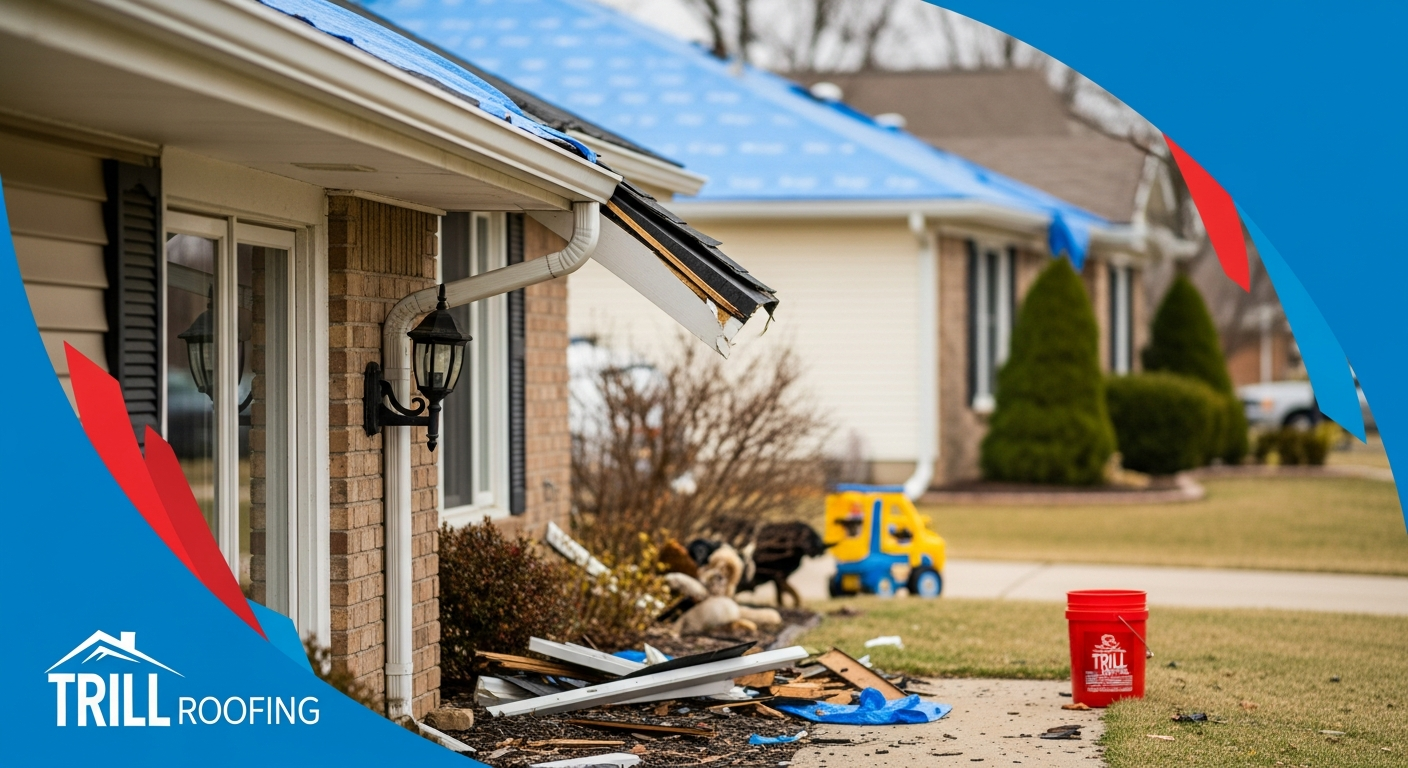
Spring thunderstorms in Alton’s Middletown and Upper Alton neighborhoods regularly produce 60+ mph winds that damage fascia and soffits while leaving the main roof surface intact. These overlooked roof edge components protect your home’s structural integrity, yet most homeowners only discover the damage months later when water stains appear on exterior walls. Andy from Trill Roofing sees this pattern repeatedly across Madison County — wind damage that insurance adjusters miss during initial inspections but creates expensive problems down the road.
What to Do After Wind Damage in Alton
- Walk your property perimeter and photograph any loose or damaged fascia boards, especially on the windward (typically southwest) side
- Check soffit panels for cracks, gaps, or sections that appear to be pulling away from the roofline
- Document any gutters that are sagging or separated from fascia boards
- Look for missing or damaged drip edge along roof perimeters
- Schedule a professional inspection within 72 hours if you spot any issues
- Contact your insurance company immediately if damage is present — wind damage claims have strict reporting windows
Signs of Damaged Fascia and Soffits in Alton Homes
Fascia boards and soffits take the brunt of wind forces during storms because they create the largest surface area for wind to catch and pull. According to NOAA storm data, Madison County averages 15 severe thunderstorm events annually, with peak winds frequently exceeding the 45 mph threshold where fascia damage typically begins.
The physics work against these components. Wind hitting a roof edge creates uplift pressure that can reach 150% of the actual wind speed. A 50 mph gust generates forces equivalent to 75 mph directly on fascia boards. Most residential fascia uses 1×6 or 1×8 cedar or composite boards attached every 16-24 inches — adequate for normal conditions but vulnerable when wind gets underneath loose sections.
Alton’s housing stock compounds this vulnerability. Many homes in the Hunterstown and Rock Springs areas were built between 1950-1980 using construction methods that didn’t account for today’s more frequent severe weather patterns. Original fascia installations often lack the continuous backing and upgraded fastener schedules that newer building codes require.
Alton’s Wind Patterns and Roof Edge Vulnerability
Alton sits in the Mississippi River valley where topography creates wind acceleration zones during storms. The bluffs along the Great River Road funnel storm winds, creating microbursts that hit neighborhoods like Grandview and Seminary Hill with particular intensity. National Weather Service data shows that Alton experiences wind shear conditions during 60% of severe thunderstorms, creating the rotating air patterns that cause the most fascia and soffit damage.
Local soil conditions add another layer of risk. Madison County’s clay-heavy soils expand and contract significantly with moisture changes, causing slight foundation movement that can loosen fascia attachment points over time. The poorly drained Godfrey series soils common throughout Alton retain water, keeping foundations unstable longer after storms.
Building orientation matters significantly in Alton. Homes facing southwest toward the Missouri bluffs receive the most direct storm impact. The Timber Hills and Liberty Park subdivisions, built primarily in the 1990s, show this pattern clearly — southwest-facing roof edges require fascia repairs twice as often as protected north-facing sections. Even newer construction in areas like Forest Hills experiences accelerated wear on windward fascia due to Alton’s unique wind patterns.
Illinois building codes require ice and water shield installation but don’t mandate enhanced fascia attachment in high-wind zones. Most Alton contractors follow standard practices that work fine until a severe storm exposes the limitations.
Wind Damage Roof Edge Warning Signs
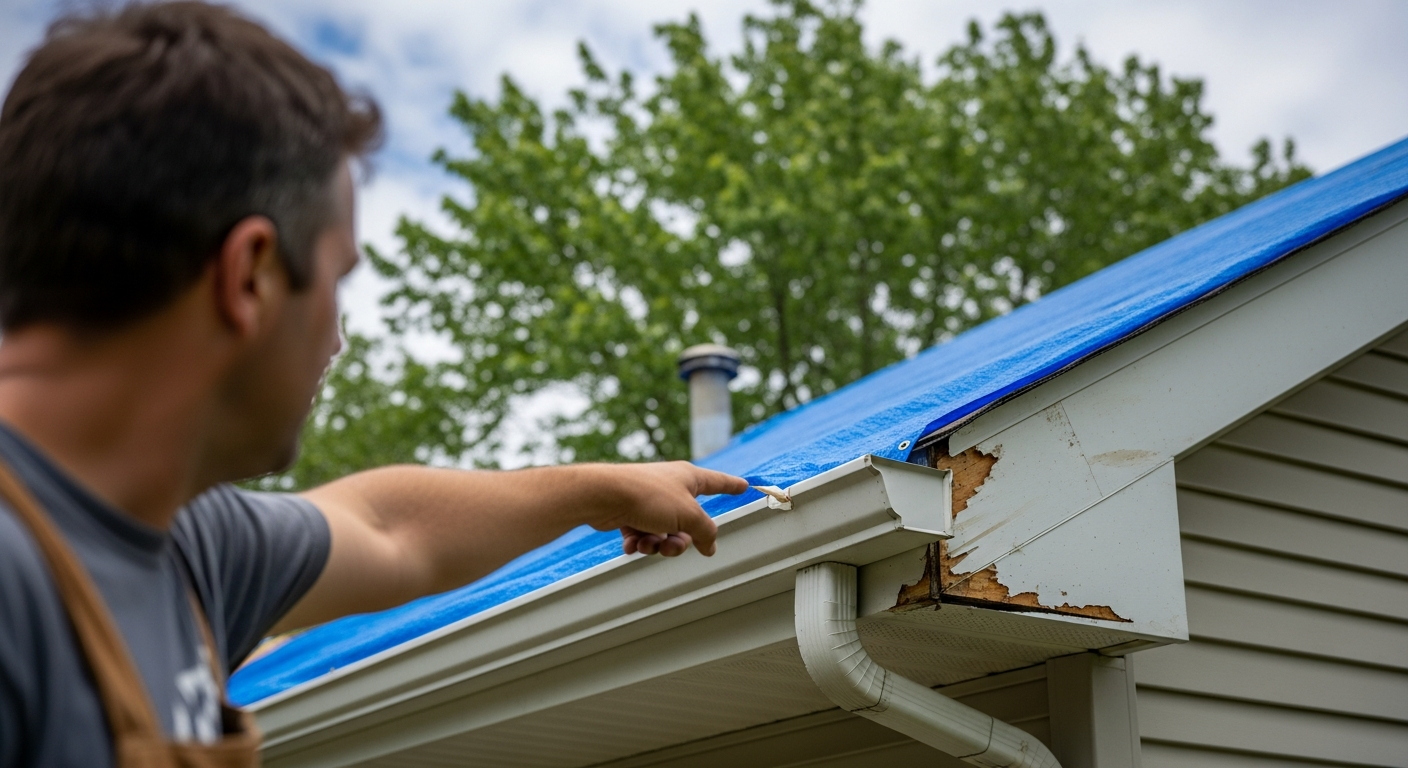
Damaged fascia rarely fails catastrophically — instead, it develops progressive problems that worsen with each weather cycle. The first sign is usually slight separation between the fascia board and the roof decking, visible as a thin shadow line or gap when viewed from the ground. This gap allows wind to penetrate behind the fascia during subsequent storms, accelerating damage.
Soffit damage appears differently but creates similar long-term problems. Aluminum soffit panels crack along their length, while vinyl soffits develop stress fractures at the attachment points. Wooden soffits show water staining or slight warping before more obvious damage appears. All these early indicators mean the protective barrier between your attic space and exterior weather has been compromised.
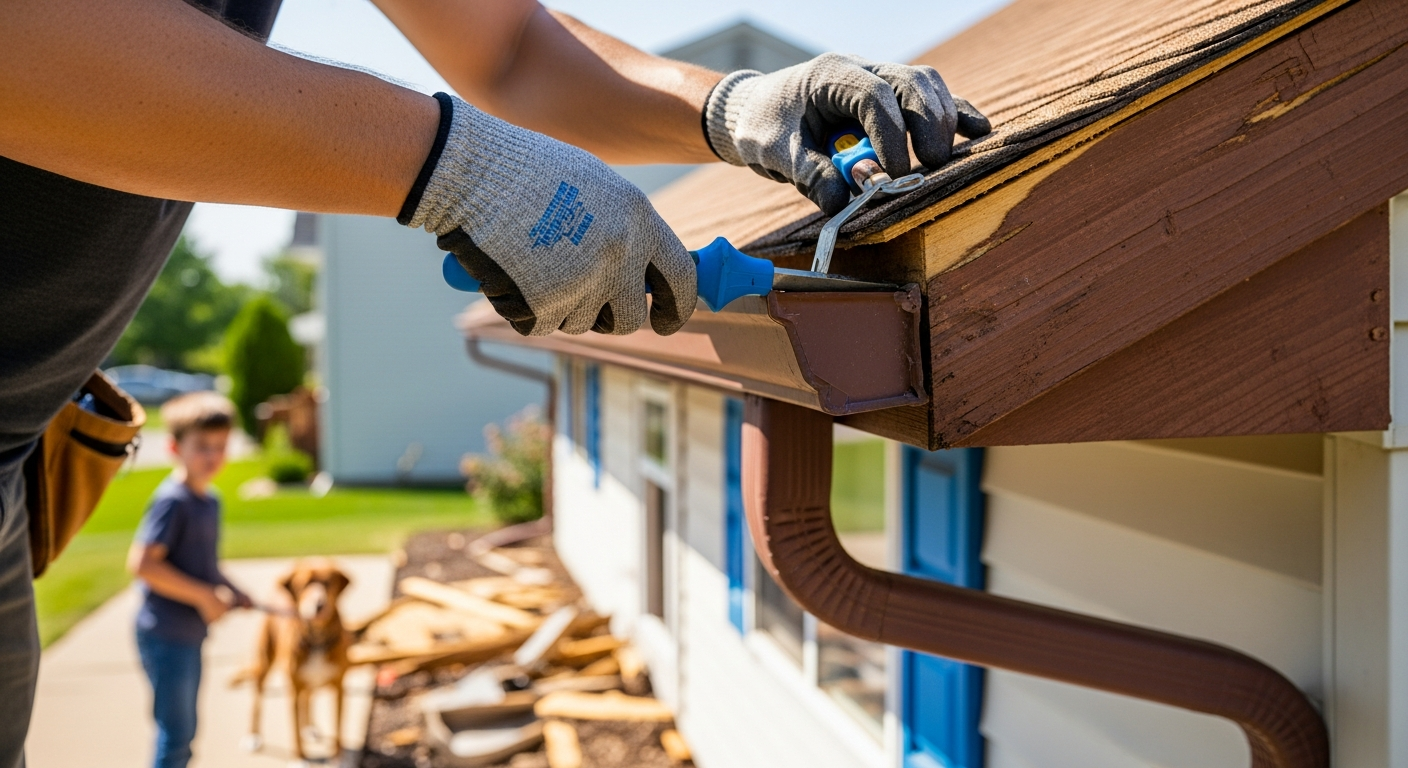
Gutters provide another diagnostic clue for fascia damage. When fascia boards loosen, attached gutters begin to sag or separate. A gutter that appears straight but has pulled slightly away from the roofline indicates fascia movement that requires immediate attention.
Professional Wind Damage Assessment Methods
Trill Roofing approaches fascia and soffit inspections systematically, using techniques that reveal damage invisible from ground level. Andy and his crew use telescoping inspection tools and ladder access to examine attachment points, checking for the slight loosening that precedes obvious damage. They test fascia boards for movement by applying gentle pressure at multiple points along each section.
Their inspection process includes moisture meter readings on wooden fascia components. Wind-driven rain penetration often begins before visible damage appears, and elevated moisture levels indicate compromised weather sealing. This data helps prioritize repairs before water damage spreads to underlying roof decking or attic areas.
A recent project in Alton’s Upper Alton neighborhood illustrates this approach. After a May thunderstorm, the homeowner reported minor gutter sagging but no visible roof damage. Trill Roofing’s detailed inspection revealed fascia board movement along 40 feet of the home’s southwest edge — damage that would have led to significant water infiltration during the next heavy rain. The insurance company initially questioned the claim until Andy provided detailed photos and measurements showing the structural movement.
Soffit Repair Cost and Methods in Alton IL
Soffit repairs in Madison County typically range from $8-15 per linear foot for aluminum panel replacement, $12-20 per linear foot for vinyl, and $15-25 per linear foot for wooden soffit restoration. These costs assume standard residential installation with normal access — multi-story homes or complex rooflines increase labor requirements significantly.
The repair approach depends on the damage extent and soffit material. Aluminum soffits with isolated panel damage often need complete panel replacement because matching aged aluminum proves difficult. Vinyl soffit systems allow for easier partial repairs, but color matching becomes an issue after 5-7 years of UV exposure.
Wooden soffits require the most complex repairs. Surface damage might need only spot treatment and repainting, but any structural damage typically requires complete section replacement with pressure-treated lumber. Trill Roofing’s storm damage repair process includes evaluating whether partial repairs will match existing materials or if complete sections need replacement for aesthetic consistency.
Timing matters significantly for soffit repairs. Exposed areas deteriorate quickly once the weather barrier fails, and Alton’s humid summers accelerate this process. Repairs completed within 30 days of damage typically require less extensive work than repairs delayed until the next season.
Preventative Roof Maintenance for Alton Storms
Regular maintenance prevents most wind damage to fascia and soffit components. Annual inspections should focus on attachment point integrity, particularly after Alton’s typical severe weather season from April through June. Proper attic ventilation reduces moisture buildup that weakens wooden fascia over time.
Preventative measures include upgrading attachment methods during routine maintenance. Adding construction adhesive behind loose fascia sections and using longer deck screws instead of standard nails significantly improves wind resistance. These upgrades cost minimal amounts during planned maintenance but prevent expensive emergency repairs.
Gutter maintenance directly impacts fascia longevity. Clogged gutters create ice dams during Alton’s freeze-thaw cycles, and the additional weight stresses fascia attachment points. Professional gutter installation and maintenance includes fascia inspection as part of the service.
For comprehensive protection, consider scheduling professional inspections after any storm producing winds over 45 mph. Trill Roofing offers free storm damage assessments for Alton area homeowners, helping identify problems before they require extensive repairs. Contact their team at (618) 767-7325 for storm damage evaluation or visit their service areas page to confirm coverage in your neighborhood.
Frequently Asked Questions
How long after a storm should I inspect for fascia and soffit damage in Alton?
Inspect within 24-48 hours if safe ground-level viewing is possible, but schedule professional inspection within one week. Wind damage to fascia and soffits often becomes more apparent as loosened components shift during subsequent weather. Insurance companies typically require damage reporting within 72 hours, so early inspection protects your claim options. Trill Roofing provides free storm assessments and can document damage for insurance purposes.
What’s the average cost for fascia repair on a typical Alton home?
Fascia board replacement costs $12-18 per linear foot for standard residential installation in Madison County, including materials and labor. A typical single-story home requires 100-150 linear feet of fascia, making complete replacement $1,200-2,700. Partial repairs for storm damage usually involve 20-40 linear feet, costing $240-720. These estimates assume standard access and cedar or composite materials common in Alton construction.
Can I claim fascia and soffit wind damage on homeowners insurance in Illinois?
Yes, wind damage to fascia and soffits is typically covered under standard Illinois homeowners policies, provided the damage resulted from a covered weather event. Insurance companies may initially focus on obvious roof damage and overlook fascia problems, making professional documentation important. Illinois law requires insurers to pay for matching materials, so partial fascia replacement often qualifies for complete section coverage to maintain appearance consistency.