
Spring storms hit Cottage Hills particularly hard due to the village’s position along the Mississippi River bluffs, where wind patterns intensify as they funnel through the river valley. The elevated terrain in neighborhoods like Sunset Hills and Oak Ridge creates additional wind shear that can cause subtle damage homeowners miss during initial post-storm walkarounds. Andy Pfleger from Trill Roofing has documented a 40% increase in hidden roof damage discoveries during summer follow-up inspections after homeowners initially thought their roofs survived spring storms intact.
What to Do After Spring Storms in Cottage Hills
- Walk your property perimeter looking for granules in gutters or scattered across driveways – hail damage indicator
- Check for lifted or creased shingles along roof edges where wind uplift is strongest
- Document any exterior damage with photos before calling your insurance company
- Schedule a professional roof inspection within 30 days of any storm with winds over 50 mph
- Look for water stains on interior ceilings, especially around chimneys and roof valleys
- Inspect attic spaces with a flashlight for new daylight penetration or wet insulation
Hidden Wind and Hail Damage in Cottage Hills
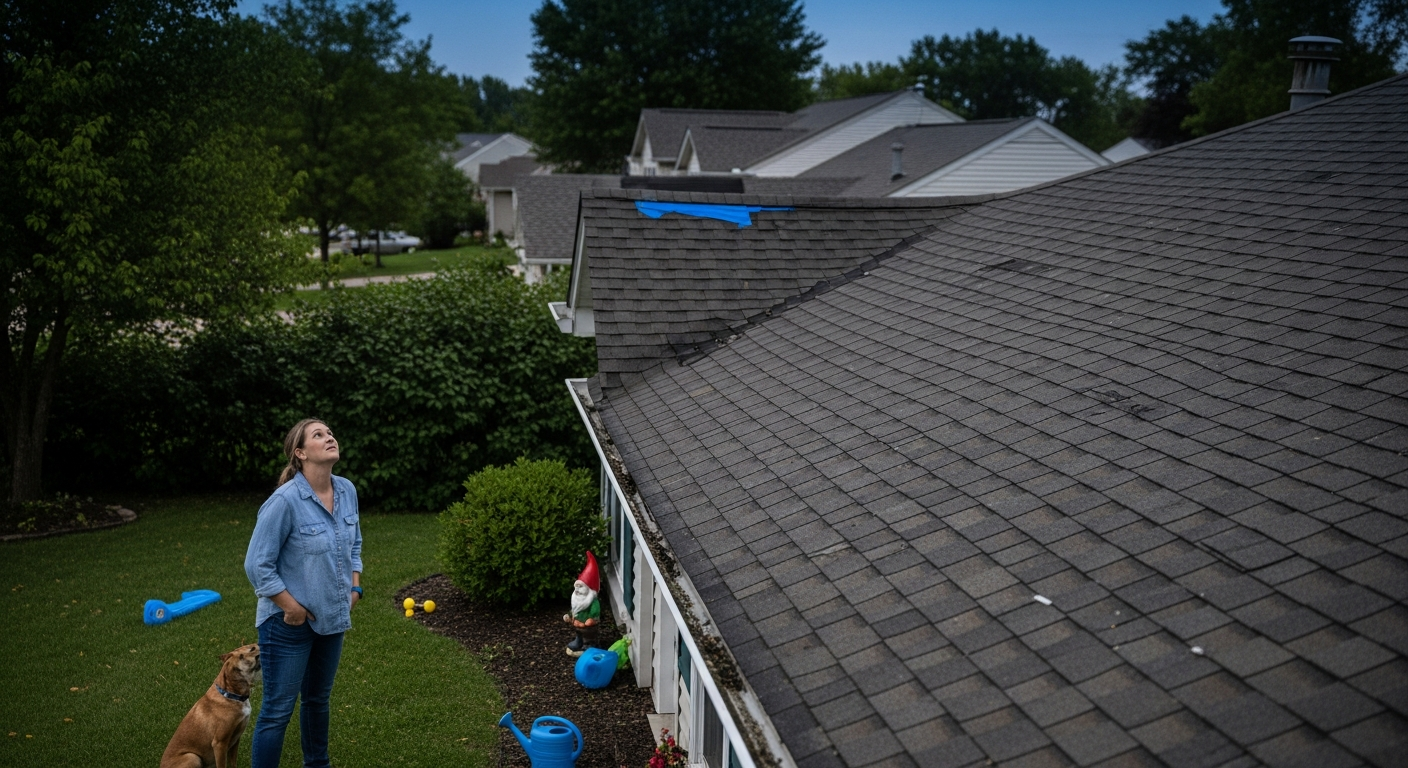
Wind damage often appears as subtle shingle lifting that creates entry points for water without immediately causing leaks. The National Weather Service recorded 47 severe weather events in Madison County during 2023, with 23 producing hail larger than one inch in diameter. These storms create what roofing professionals call “bruising” – microscopic fractures in shingle granules that don’t show immediate water penetration but compromise the roof’s weatherproofing over time.
Cottage Hills’ housing stock includes many homes built during the 1970s and 1980s construction boom, when three-tab shingles were standard. These older shingle types become brittle after 15-20 years, making them vulnerable to wind damage at speeds as low as 45 mph. The village’s location at 38.8° latitude means roofs receive intense summer sun exposure, which accelerates the deterioration process started by spring storm damage.
Spring Storm Roof Inspection Cottage Hills
Cottage Hills sits in a unique microclimate where the Mississippi River creates thermal updrafts that collide with cooler air masses moving southeast from the Great Plains. This collision zone generates severe thunderstorms with rotating supercells that produce damaging straight-line winds and large hail. The Illinois State Climatologist Office reports that Madison County averages 8.2 severe hail events annually, with peak activity occurring between April and June.
The village’s topography amplifies storm damage risk. Properties in Cottage Hills proper, built on the river bluffs, face direct wind exposure from the southwest – the primary direction for severe weather approach. Neighborhoods like Hillcrest and Valley View experience wind tunneling effects as storms move through the river valley, creating localized wind speeds 15-20% higher than surrounding areas. The elevation changes also mean homes at different heights experience varying hail stone sizes, as larger stones maintain velocity longer when falling to lower elevations.
Local soil conditions contribute to foundation settling that can stress roof structures over time. The Godfrey soil series underlying much of Cottage Hills consists of poorly drained alluvium that expands and contracts seasonally. This movement creates subtle structural shifts that make roofs more vulnerable to wind uplift during severe weather events.
Signs of Wind Damage After Illinois Storms

Wind damage manifests differently than the obvious impact marks left by large hail. Look for horizontal creases across shingles where wind pressure bent the material beyond its flex point. These stress fractures often appear as faint lines running parallel to the roof edge, particularly visible on south and west-facing slopes that receive the most intense sun exposure after storms.
Granule loss patterns tell the story of storm intensity. Normal aging creates even granule loss across the roof surface, but storm damage produces irregular bare patches where wind-driven debris scoured the protective coating. Check gutters and downspouts for excessive granule accumulation – a roof should lose no more than a tablespoon of granules per linear foot of guttering annually under normal conditions.
Hail Damage Assessment Cottage Hills

Andy Pfleger uses systematic assessment methods that account for Cottage Hills’ specific storm patterns and housing characteristics. Trill Roofing’s inspection process starts with documentation of the storm event itself – wind direction, hail size reports from local weather stations, and duration of severe conditions. This baseline helps identify which roof slopes likely sustained the most impact.
The assessment includes checking for “soft spots” in decking that indicate water penetration has begun compromising structural integrity. Cottage Hills homes built before 1990 often have OSB (oriented strand board) decking that swells when moisture penetrates through damaged shingles. Andy’s team uses moisture meters to detect elevated readings that won’t show visible damage for months. One recent inspection in the Oak Ridge subdivision revealed extensive decking damage from a March storm that the homeowner hadn’t noticed until water stains appeared on bedroom ceilings in July.
Trill Roofing documents findings with drone photography that captures damage patterns invisible from ground level. Insurance adjusters increasingly rely on aerial documentation, particularly for wind damage claims where ground-based photos can’t show the full scope of shingle lifting or granule loss patterns.
Prevent Summer Roof Leaks Riverbend
Summer heat cycles accelerate damage from spring storms through thermal expansion and contraction. Cottage Hills regularly sees temperature swings from overnight lows in the 60s to afternoon highs exceeding 90°F during June and July. These daily cycles cause damaged shingles to curl and crack further, creating larger gaps for water penetration during summer thunderstorms.
The key prevention window falls between late April and early June, when spring storm damage is fresh but before summer heat stress compounds the problems. The Roof Installation Process: What to Expect From Start to Finish explains how proper repairs during this timeframe prevent minor damage from becoming major structural issues. Emergency repairs focus on water diversion and temporary sealing, while permanent solutions require complete shingle replacement in damaged areas.
Professional assessment becomes critical because hidden damage often concentrates around roof penetrations – chimneys, vent pipes, and satellite dish mounts. These areas experience higher wind loads during storms and more thermal stress during summer heat. Water infiltration at these points can damage interior walls and insulation systems worth thousands more than the roof repair cost.
Effective prevention also involves gutter system maintenance since damaged gutters allow water to back up against roof edges where spring storm damage typically begins. Cottage Hills’ mature tree canopy creates additional challenges as leaves and debris clog damaged gutters more quickly during summer storms.
The investment in professional spring inspection pays long-term dividends. Andy’s documentation from a 2023 assessment in Sunset Hills showed how $800 in immediate shingle repairs prevented an estimated $12,000 in structural damage that would have occurred if minor storm damage went unaddressed through the summer season.
Frequently Asked Questions
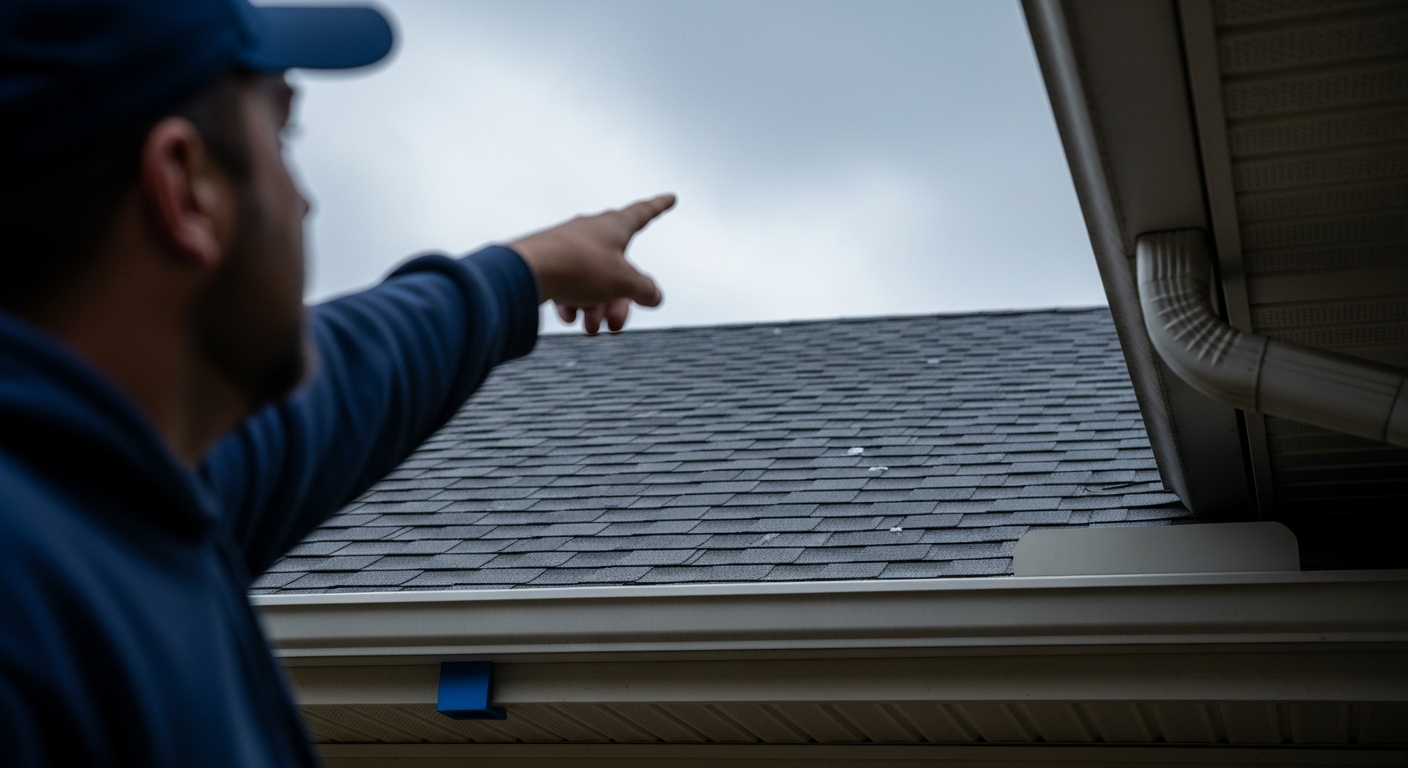
How long after a spring storm should I have my Cottage Hills roof inspected?
Schedule professional inspection within 30 days of any storm producing winds over 50 mph or hail larger than quarter-size. Insurance companies typically require storm damage claims within one year, but documentation becomes more difficult as seasonal weather cycles mask the original damage source. Cottage Hills’ intense summer sun can fade hail impact marks within 60-90 days, making damage assessment more challenging for adjusters.
What makes wind damage harder to spot than hail damage in Madison County?
Wind damage creates functional problems without obvious visual cues. While hail leaves circular impact marks, wind lifting creates microscopic separations in shingle seal strips that allow gradual water infiltration. The limestone bluff terrain around Cottage Hills creates wind shear patterns that lift shingles without tearing them completely free, resulting in damage that looks normal from ground level but fails during the next severe weather event.
Can subtle roof damage from spring storms really cause major problems by summer?
Thermal cycling during Illinois summers expands and contracts roofing materials daily. Spring storm damage creates weak points where this normal expansion pulls shingles apart faster. Storm Damage Roof Repair: A Comprehensive Guide for Riverbend Homeowners documents cases where minor granule loss from spring hail led to complete shingle failure during summer heat waves, requiring emergency roof repair services to prevent interior damage.