
After a major thunderstorm, a storm damage roof inspection in St. Louis should start with what you can safely check from the ground: missing shingles, lifted edges, hail dents, damaged gutters, granule loss, attic moisture, and new stains indoors. You do not need to climb onto the roof to know when something may be wrong. You need a clear checklist, good photos, and a professional inspection if the storm left visible damage or uncertainty.
St. Louis thunderstorms can be hard on residential roofs. A single storm may bring wind gusts, hail, flying branches, heavy rain, and wind-driven water in the same hour. The roof may look normal from the driveway, but shingles can be bruised, tabs can be creased, flashing can shift, and gutters can show impact marks that point to damage above.
This guide walks St. Louis homeowners through the signs to check after a thunderstorm, how to document what you find, and when to call Trill Roofing before the next storm makes a small opening worse.
What should you check first after a St. Louis thunderstorm?
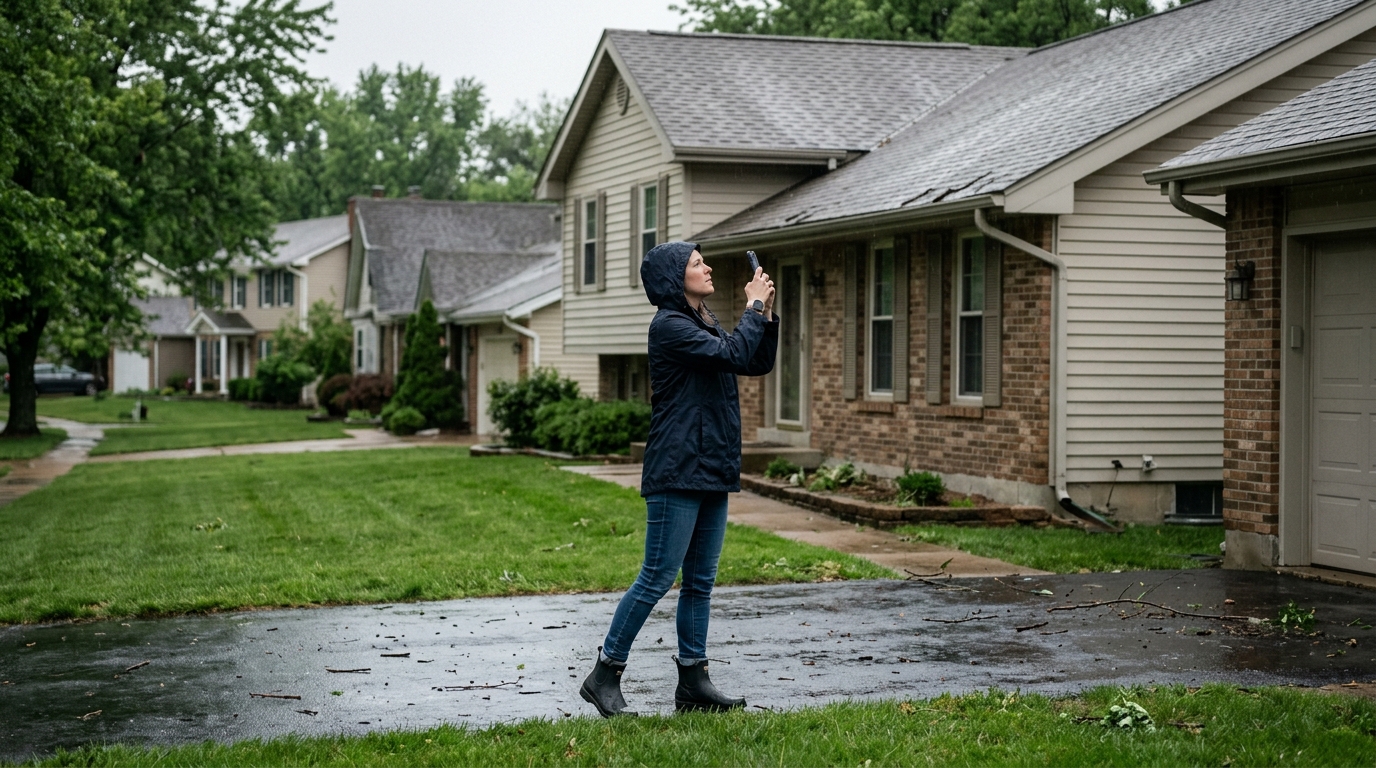
Start with safety and the ground-level evidence. Before you focus on the roof, walk around the property and check for downed power lines, broken branches, loose siding, shattered glass, or standing water. If the area is unsafe, stop and wait for conditions to clear. Roof damage can be inspected later; personal safety comes first.
Once it is safe, look for storm clues around the home. Shingle pieces in the yard, loose ridge cap material, dented downspouts, damaged window screens, torn fascia, and branches on the roof all suggest the storm may have affected the roof system. Take photos from several angles before moving debris. If you later need contractor documentation or insurance support, early photos are useful.
Do not climb onto a wet or storm-damaged roof. Wet shingles are slippery, and damaged areas may not support weight properly. A homeowner storm check should be done from the ground, attic, and interior rooms. If you see anything questionable, schedule a professional roof inspection so the details can be reviewed safely.
How can you spot wind and hail damage on asphalt shingles?
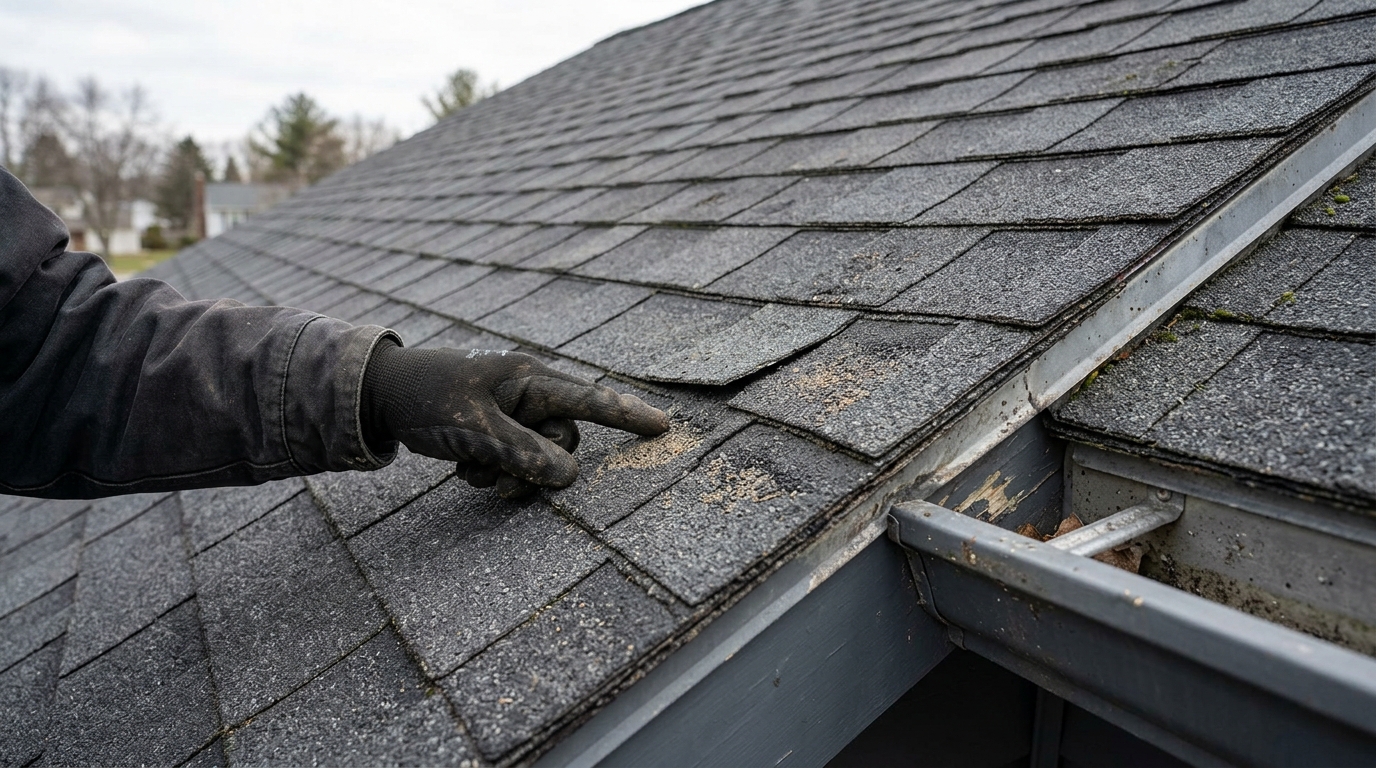
Wind damage often shows up as missing shingles, lifted shingle edges, creased tabs, exposed nail lines, or shingles that no longer sit flat. In St. Louis thunderstorms, gusts can hit one roof slope harder than another, so check every side of the home rather than assuming the front slope tells the whole story.
From the ground, look for uneven shingle patterns. A lifted tab may create a shadow line. A creased shingle may look bent or slightly shiny along the fold. Missing shingles may reveal dark underlayment or a different color patch beneath. Ridge caps can also loosen because they sit at high wind-exposure points.
Hail damage is not always obvious from the ground. On shingles, hail may leave bruised spots, missing granules, exposed asphalt, soft impact marks, or circular areas that look darker than the surrounding surface. The damage can be easier to confirm on metal components first: gutters, downspouts, roof vents, flashing, mailbox tops, and outdoor furniture.
Wind and hail damage matter because the roof may no longer shed water correctly. Even if a shingle is still attached, wind-driven rain can get underneath it during the next storm. If you see missing shingles, lifted tabs, or hail clues, Trill Roofing’s storm damage repair team can document the roof and explain whether repairs are needed.
Which gutter, flashing, and drainage clues point to roof storm damage?
Gutters often show storm evidence before the roof does. After a thunderstorm, check for dents, bent sections, loose hangers, and downspouts that were knocked out of place. If gutters pulled away from the fascia, water may have been forced behind the system or debris may have overloaded it.
Look near downspout exits for piles of shingle granules. Some granules are normal over the life of a roof, but sudden piles after a storm deserve attention. Also check for shingle fragments, roofing nails, or small pieces of flashing near the downspouts.
Flashing protects the places where the roof meets walls, chimneys, vents, skylights, dormers, and valleys. Thunderstorm winds can move loose flashing, drive rain into small gaps, or push debris into vulnerable transitions. From the ground, look for bent metal, gaps, rusted areas, missing sealant, lifted shingles around penetrations, or staining below a chimney or vent.
Drainage problems can create roof-edge damage even when the main roof slope looks fine. Overflowing gutters can soak fascia, push water behind the gutter, and contribute to soffit or underlayment problems. Trill Roofing’s guide to gutter and roof integration explains why gutters, drip edge, fascia, and shingles need to work together after heavy rain.
How do you check the attic and interior after a storm?
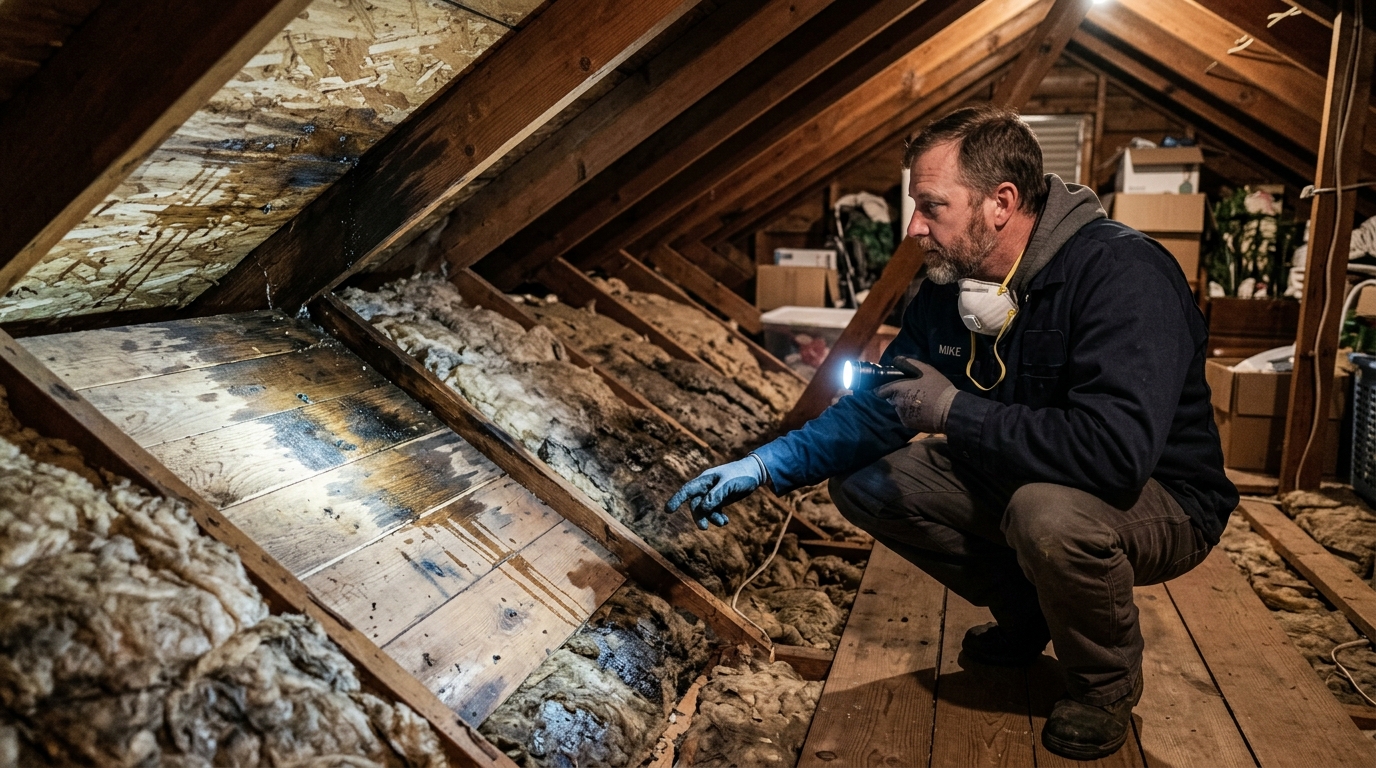
The attic can reveal storm damage before water reaches the ceiling. Use a flashlight and inspect the underside of roof decking, especially near valleys, chimneys, vents, and exterior walls. Look for damp insulation, dark stains, fresh drips, rusted nail tips, musty odors, or daylight coming through the roof deck.
If you find moisture, take photos and note the location. Try to match the attic location with the roof area above it, but remember that water can travel along framing before it drips. The stain inside may not be directly below the roof opening.
Walk through upper rooms, closets, hallways, and rooms around chimneys or skylights. Look for new yellow or brown ceiling stains, bubbling paint, peeling drywall tape, damp trim, musty smells, or water around light fixtures. If water is near electrical fixtures, avoid the area and call the appropriate professional immediately.
Some leaks only appear during wind-driven rain. A ceiling stain may dry after the storm even though the roof opening remains. Take a dated photo, mark the edge with painter’s tape if appropriate, and check it after the next rain. Growth in the stain is a sign the problem is active.
How should you document storm damage for a roof inspection?
Good documentation helps everyone understand what happened. Take wide photos of each side of the home, then closer photos of visible damage. Include gutters, downspouts, siding, window screens, fences, outdoor furniture, and any roofing material found on the ground. Write down the storm date and approximate time.
Keep the photos organized and avoid throwing away damaged materials before they are documented. If a branch hit the roof, photograph the branch location before removal if it is safe to do so. If you have interior water stains, photograph those as well.
Documentation does not replace a contractor inspection, but it gives your roofer a clearer starting point. It can also help if you later need to discuss damage with your insurance carrier. For more on paperwork, see Trill Roofing’s resource on roof insurance claim documentation.
When should you call Trill Roofing after a thunderstorm?
Call for a professional inspection if you see missing shingles, lifted tabs, hail dents, heavy granule loss, damaged flashing, gutter impact marks, attic moisture, or interior stains. You should also call if a major storm hit your neighborhood and you cannot safely confirm the roof condition from the ground.
A professional inspection gives you a clear answer: no urgent issue, minor repair, storm damage repair, or replacement planning. The goal is not to create pressure. The goal is to understand the roof’s condition before the next storm makes a small opening larger.
If the roof is older or damage is widespread, it may be worth discussing roof replacement options. If the issue is localized, a roof repair may be the practical next step. Either way, you should not have to guess.
FAQ: Storm damage roof inspection in St. Louis
How soon should I inspect my roof after a thunderstorm?
Check the property as soon as conditions are safe. Start from the ground and inside the home. If you see roof, gutter, attic, or interior warning signs, schedule a professional inspection promptly.
Can hail damage be invisible from the ground?
Yes. Hail bruising and granule loss can be difficult to confirm without a close inspection. Dented gutters, vents, and downspouts are clues that the roof may also need review.
Does wind damage always mean shingles are missing?
No. Wind can lift, crease, or loosen shingles without removing them completely. Those shingles may still be vulnerable to wind-driven rain during the next storm.
Should I climb on my roof to check storm damage?
No. Wet or damaged roofs are dangerous. Use a ground-level, attic, and interior checklist, then call a professional roofer for close inspection.
What should I do if water is actively leaking inside?
Protect the interior if it is safe, avoid electrical hazards, photograph the damage, and call a roofing professional. Active leaks should be inspected quickly to limit additional damage.
Schedule a storm damage roof inspection in St. Louis
If your home was hit by hail, wind, or heavy rain, Trill Roofing can help you understand what happened and what to do next. Our team inspects the roof system, documents visible damage, explains repair options, and helps St. Louis homeowners make practical decisions after major weather.
Schedule your free roof inspection with Trill Roofing and get a clear answer before the next thunderstorm rolls through.