Storm Damage Roof Repair Metro East, IL
When severe weather strikes the Metro East area, your roof takes the first hit. High winds, hail, and heavy rain can leave your home exposed and vulnerable within minutes. Trill Roofing provides fast, professional storm damage roof repair across Metro East, IL — from Alton and Edwardsville to Collinsville and Granite City. Our locally owned team responds quickly, documents damage thoroughly, and restores your roof with repairs built to last. Call (618) 304-7094 or schedule your free inspection today.
What Should I Do Immediately After Storm Damage Hits My Metro East Roof?
The first 24 hours after a storm are critical. Taking the right steps protects your home, strengthens your insurance claim, and gets repairs started faster.
Step 1: Stay safe. Avoid going onto the roof yourself. Downed power lines, wet surfaces, and hidden structural damage create serious hazards.
Step 2: Document everything from the ground. Use your phone to photograph fallen branches, visible shingle damage, dented gutters, and any interior leaks or water stains. Date-stamped photos become powerful evidence for your insurance adjuster.
Step 3: Call Trill Roofing for emergency tarping. We offer same-day emergency roof tarping throughout Madison County and St. Clair County. A properly installed tarp stops water intrusion, prevents mold growth, and protects your home until permanent repairs begin.
Step 4: Contact your insurance company. Report the damage and request an adjuster inspection. Tell them you have a local contractor already documenting the damage.
Step 5: Schedule a professional inspection. Trill Roofing provides free storm damage inspections across Metro East. We climb, photograph, and deliver a written, itemized repair estimate you can use for both insurance and your own records.
How Can I Tell If My Roof Has Storm Damage?
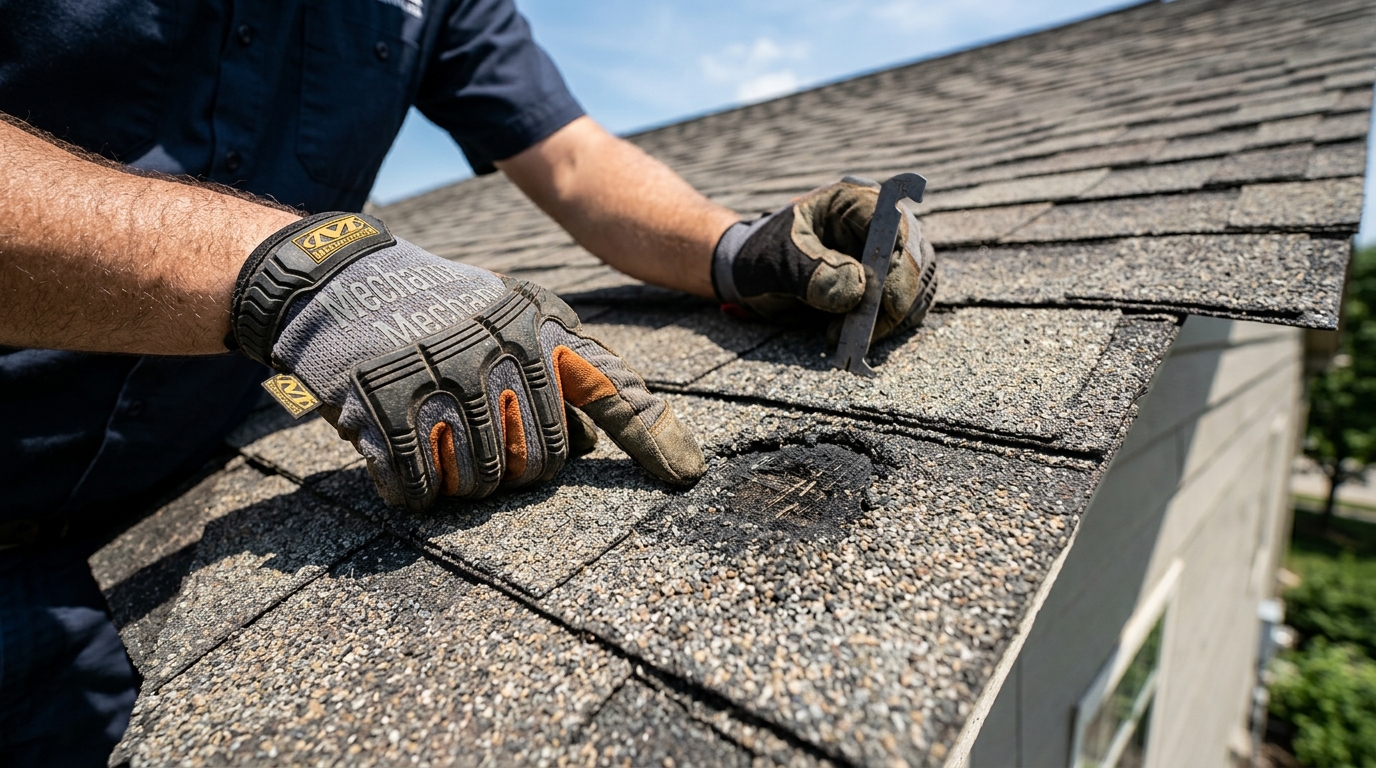
Not all storm damage is obvious from the street. Some of the most costly problems hide in plain sight until water starts dripping through your ceiling.
Look for these exterior warning signs:
- Missing or lifted shingles: High winds common in Metro East thunderstorms can rip shingles completely off or break the adhesive seal, leaving tabs flapping.
- Hail dents and bruises: Hailstones fracture the granule layer on asphalt shingles, exposing the asphalt mat underneath to UV damage. Look for dark spots or dimples that feel soft to the touch.
- Cracked or torn flashing: Wind-driven rain exploits gaps around chimneys, vents, and skylights.
- Dented gutters and downspouts: If your gutters look beat up, your roof probably took a beating too.
- Debris impact marks: Tree branches, fence panels, and other flying objects can puncture roofing materials.
Check inside your home as well:
- Water stains on ceilings or walls
- Peeling paint or bubbling drywall
- Musty odors in the attic
- Sudden spikes in your energy bill (indicating insulation damage)
If you suspect damage but cannot see it clearly, schedule a professional roof inspection. Our crews know exactly where Metro East storm damage tends to hide.
What Types of Storm Damage Are Most Common in Metro East, Illinois?
Metro East homeowners face a rotating cast of severe weather threats across the seasons. Understanding what each storm type does to your roof helps you respond faster and plan smarter.
Wind Damage
Thunderstorms and frontal systems regularly produce wind gusts exceeding 60 mph across Madison and St. Clair counties. These winds lift shingle tabs, tear off ridge caps, and send debris sailing into rooftops. Even “minor” wind events can break the adhesive seal on asphalt shingles, creating entry points for water months later.
Hail Damage
Spring and summer hailstorms are a fact of life in the Metro East region. Hailstones as small as one inch in diameter can crack shingles, dent metal vents, and destroy granule layers. The damage often looks cosmetic at first but accelerates aging dramatically.
Heavy Rain and Flash Flooding
When Metro East storms dump inches of rain in an hour, water finds every weak point in your roofing system. Clogged gutters overflow, valleys back up, and compromised flashing fails under pressure.
Winter Ice and Snow
Freeze-thaw cycles common in Illinois winters create ice dams along roof edges. These ice dams block proper drainage, forcing water backward under shingles and into your home.
Tornado and Severe Weather Outbreaks
The Metro East area sits within tornado alley’s eastern edge. Even EF-0 and EF-1 tornadoes strip shingles, tear off decking, and cause structural damage requiring immediate emergency roof repair.
How Much Does Storm Damage Roof Repair Cost in Metro East, IL?
Repair costs depend on the extent of damage, your roofing material, and whether insurance covers the claim. Here is what Metro East homeowners typically invest:
Minor Storm Damage Repairs: $400 – $1,200
- Replacing a few wind-torn shingles
- Sealing small leaks around flashing
- Patching isolated hail damage
- Reattaching loose ridge vents
Moderate Storm Damage Repairs: $1,200 – $3,500
- Replacing damaged decking in sections
- Repairing multiple leak points
- Addressing widespread shingle damage across one roof face
- Gutter and fascia restoration
Major Storm Damage Repairs: $3,500 – $7,500+
- Structural repairs from fallen trees
- Extensive decking replacement
- Multi-area shingle and underlayment replacement
- Skylight or chimney surround rebuilds
Insurance-Covered Repairs:
Most storm damage repairs in Metro East are covered by homeowners insurance, minus your deductible (typically $1,000 – $2,500). Trill Roofing bills the remainder directly to your carrier and provides itemized documentation that adjusters trust. Learn more about roof insurance claim documentation to prepare for the process.
For a precise written estimate on your specific damage, request a free inspection.
Does Homeowners Insurance Cover Storm Damage Roof Repair in Metro East?
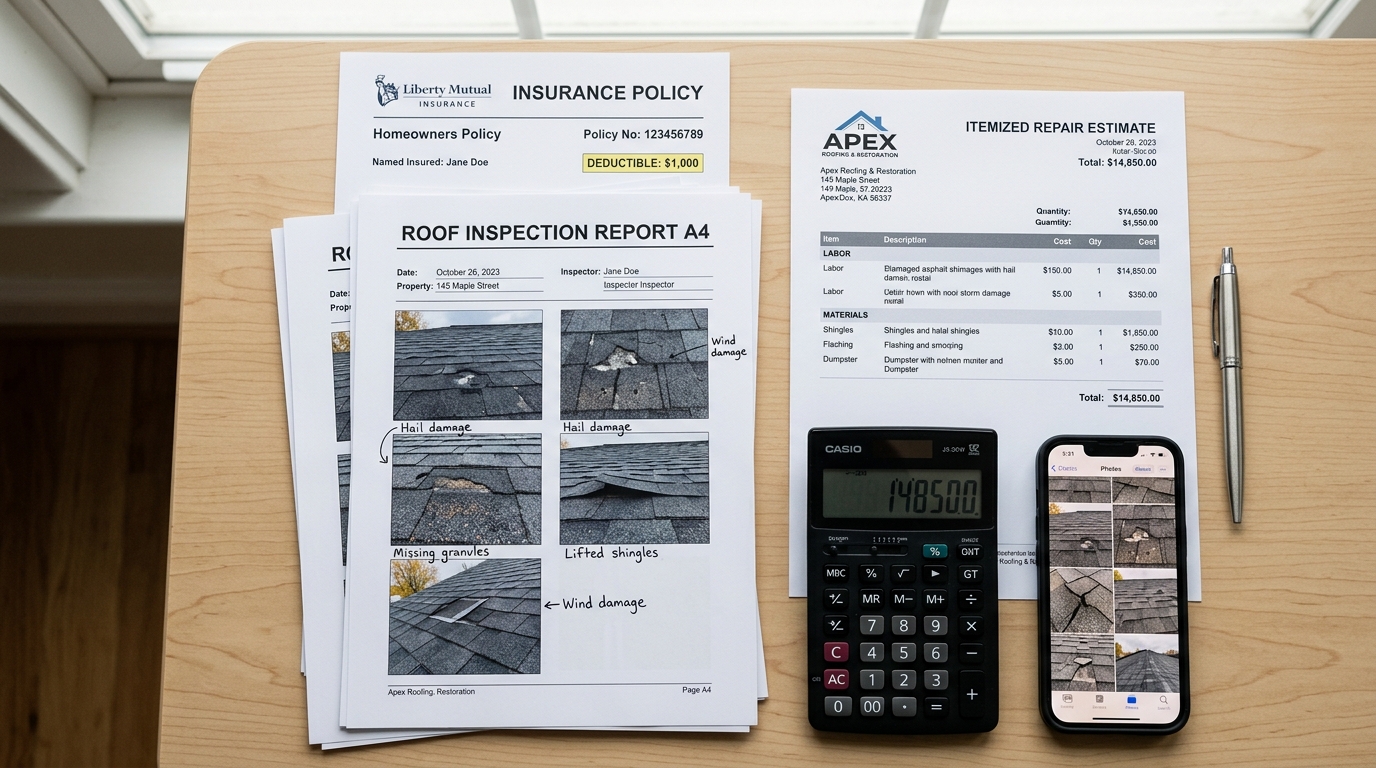
Yes — in most cases, homeowners insurance covers storm damage roof repair when the damage results from a sudden, accidental event like wind, hail, or falling trees. However, insurance does not cover damage caused by normal wear, age-related deterioration, or neglected maintenance.
What Illinois policies typically cover:
- Wind and tornado damage
- Hail impact and denting
- Damage from falling trees or limbs
- Lightning strikes
- Weight of ice and snow (within policy limits)
What they typically do not cover:
- Roofs past their expected lifespan (usually 20+ years for asphalt shingles)
- Damage from long-term leaks you ignored
- Mold or rot that developed gradually
- Cosmetic damage with no functional impairment (some policies)
How Trill Roofing helps with insurance claims:
We photograph and document every damaged area with high-resolution images. We provide written, line-item estimates that match insurance industry standards. We meet with your adjuster on-site when requested. And we explain exactly what is covered before any work begins.
If your Metro East home has recent storm damage, do not wait. Delays give insurance companies grounds to deny claims. Contact Trill Roofing for fast storm damage assessment and repair.
How Long Does Storm Damage Roof Repair Take in the Metro East Area?
Timeline depends on damage severity, material availability, and weather. Here is what Metro East homeowners can expect:
Emergency Tarping: Same Day
When water is actively entering your home, we deploy emergency crews to install temporary tarps and seal leaks within hours.
Minor Repairs: 1–2 Business Days
Most shingle replacements, flashing repairs, and small leak fixes are completed quickly with minimal disruption.
Moderate Repairs: 2–5 Business Days
Projects requiring decking patches, multiple shingle replacement areas, or gutter restoration take a few days.
Major Repairs: 1–2 Weeks
Extensive damage involving structural elements, large tree removal, or full roof-face rebuilding requires more time but still moves fast.
Weather Considerations:
We work around rain and high winds for safety. Spring and fall are busiest seasons, so scheduling early helps secure faster turnaround.
Should I Repair or Replace My Roof After Storm Damage?
This decision comes down to three factors: age, extent, and cost efficiency.
Repair is usually the right choice when:
- Your roof is less than 15 years old
- Damage is isolated to one or two areas
- The underlying decking is solid and dry
- Repair costs are well below replacement cost
Replacement makes more sense when:
- Your roof is approaching or past its expected lifespan
- Damage is widespread across multiple roof faces
- Decking is rotted or sagging
- Repair costs approach 50% or more of replacement cost
Trill Roofing gives you an honest assessment. We do not push unnecessary replacements, and we do not patch roofs that need rebuilding. If replacement is the smarter investment, we will walk you through roof replacement options for Metro East homes.
Why Hire a Local Metro East Contractor Instead of a Storm Chaser?
After every major storm, out-of-state “storm chasers” flood the Metro East area with aggressive sales tactics, cut-rate bids, and vanishing warranties. Hiring local protects you.
Trill Roofing is based in Godfrey, IL. We live here, work here, and warranty our work here. Our address is 2705 St Ambrose Dr, Godfrey, IL 62035 — the same address you will find on our license, our insurance, and our Google Business Profile.
Local accountability: When a storm chaser leaves town, your warranty leaves with them. When you hire Trill Roofing, the same phone number reaches a local human years later.
Local knowledge: We understand Metro East building codes, permit requirements, and the specific weather patterns that damage roofs here. We know which materials perform best in Madison County’s climate.
No pressure, ever: We provide free inspections and written estimates with zero obligation. You decide when and if to move forward.
Licensed and credentialed: Trill Roofing holds IDFPR license #104.020330 and maintains GAF Certified Contractor status. We carry full liability and workers compensation insurance.
What Areas Does Trill Roofing Serve for Storm Damage Repair in Metro East?
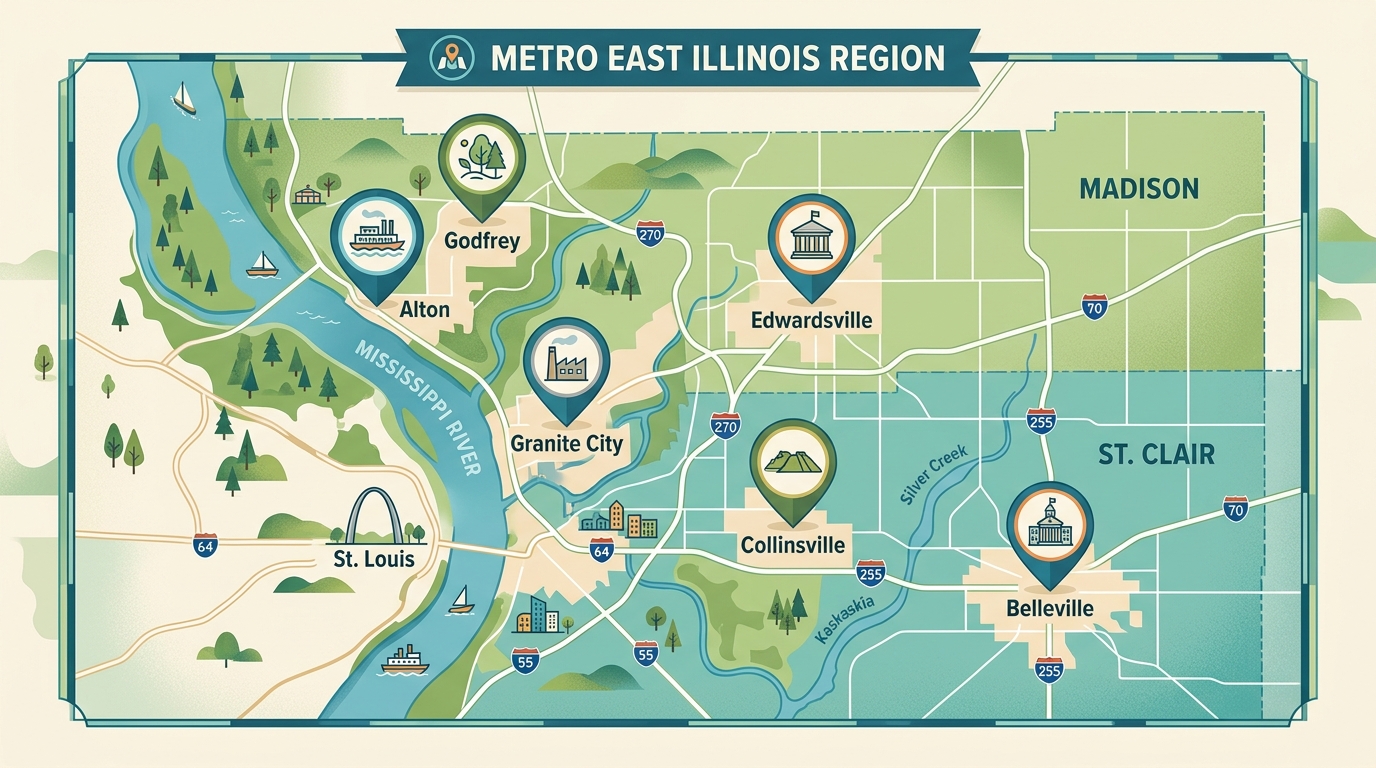
Trill Roofing provides complete storm damage roof repair services throughout the entire Metro East Illinois region, including:
Madison County: Alton, Bethalto, Collinsville, East Alton, Edwardsville, Glen Carbon, Godfrey, Granite City, Hamel, Hartford, Marine, Maryville, Roxana, Troy, Wood River
St. Clair County: Belleville, Cahokia, Caseyville, Fairview Heights, O’Fallon, Shiloh, Swansea
Jersey County: Jerseyville
Not sure if we serve your community? Call (618) 304-7094 — if you are in the Metro East region, we have you covered.
Frequently Asked Questions About Storm Damage Roof Repair in Metro East
How soon should I call a roofer after a storm?
Call within 24 hours. Fast response prevents secondary water damage and strengthens your insurance claim.
Will my insurance rates go up if I file a storm damage claim?
Storm damage claims are typically considered “Acts of Nature” and should not affect your rates the way an at-fault claim would. Check with your specific carrier.
Can I just wait and see if the leak gets worse?
Waiting is expensive. Water intrusion destroys insulation, rots decking, breeds mold, and damages ceilings and walls. Address storm damage immediately.
Do you offer financing for storm damage repairs?
Yes. Trill Roofing offers flexible financing options for homeowners who need repairs now and prefer to spread payments over time.
What if my roof is too damaged to repair?
If inspection shows replacement is the better investment, we will provide a full roof replacement estimate and help you navigate insurance coverage for the project.
Ready to fix your storm-damaged roof? Trill Roofing serves homeowners across the entire Metro East Illinois region with fast, honest, professional storm damage repair.
Call (618) 304-7094 or schedule your free inspection today.
Our local crews are standing by to protect your home and restore your peace of mind.