After the wild spring storms that hit Wood River and the broader Riverbend area in March 2024, many homeowners think they dodged a bullet if they don’t see obvious shingle damage. But the quarter-sized hail that pelted neighborhoods like Benbow City, East Wood River, and areas near the Phillips 66 refinery often creates subtle damage that goes unnoticed until summer heat turns minor issues into major leaks. Andy Pfleger and the team at Trill Roofing have seen this pattern repeat across Madison County for over a decade — what looks like a clean roof in April becomes a costly emergency repair by July.
What to Do About Subtle Hail Damage in Wood River
- Schedule a professional roof inspection within 30 days of any hail event larger than nickel-sized
- Document storm dates and hail size using the National Weather Service storm reports for Madison County
- Check your attic for water stains or dampness during the first heavy summer rain after spring storms
- Contact your insurance company within one year of the storm date to file claims for discovered damage
- Take photos of any granule accumulation in gutters or downspout areas
- Have a GAF-certified contractor assess impact marks that may not be visible from ground level
Hidden Hail Damage in Wood River Homes
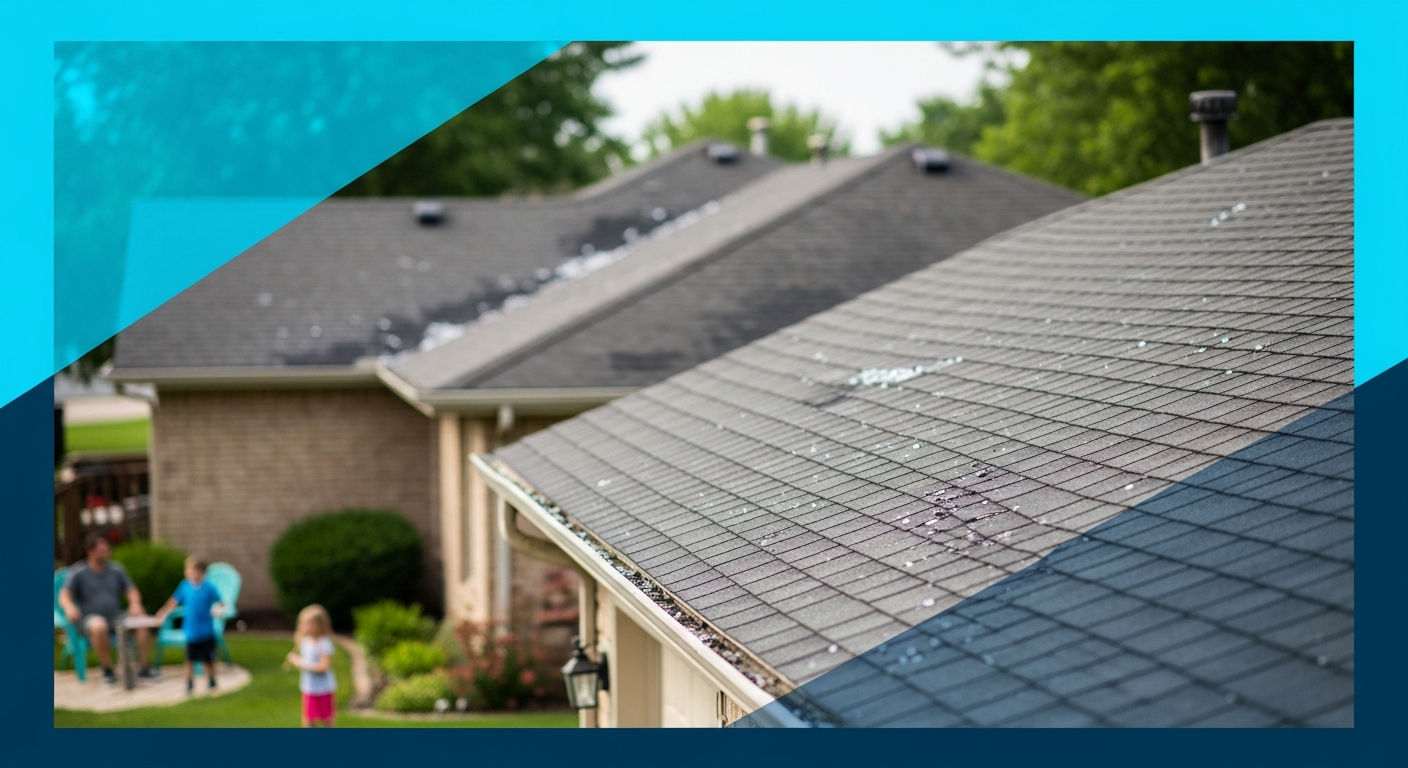
Most Wood River homes built between 1950 and 1990 feature architectural asphalt shingles that handle weather well — until hail hits. According to National Weather Service data, the Wood River area averages 3-4 significant hail events per year, with the most damaging storms typically occurring between April and June. The problem is that hail damage often doesn’t create immediate leaks.
When hail strikes asphalt shingles, it compresses the granules and exposes the underlying mat. This process, called “bruising,” weakens the shingle’s weather resistance without creating visible holes. Wood River’s clay-heavy soil means homes experience more settling movement than areas with different soil composition, which can accelerate the failure of already-weakened shingles. The Illinois State Climatologist Office reports that Madison County’s freeze-thaw cycles — averaging 45 per winter — further stress compromised roofing materials.
Spring Hail Storm Roof Repair Needs in Wood River
Wood River’s location along the Mississippi River creates unique weather patterns that homeowners need to understand. The river valley acts as a storm corridor, with severe weather often following the waterway north from St. Louis. Neighborhoods closest to the river, including the historic downtown area and residential streets near Wood River Creek, face additional moisture exposure that accelerates hail damage deterioration.
The timing matters too. Spring hail damage in Wood River becomes most problematic during summer months when temperatures regularly exceed 90 degrees. According to NOAA climate data, Wood River averages 28 days above 90°F between June and August. This heat causes damaged shingles to curl and crack along hail impact points, creating entry points for water during summer thunderstorms.
Homes in the Benbow City area, built primarily in the 1960s with standard three-tab shingles, show particular vulnerability. The East Wood River subdivision, developed in the 1970s and 1980s, features more architectural shingles that hide damage better but still fail when hail compromises the granule layer. Properties near the industrial corridor along Highway 111 face additional challenges from chemical exposure that can accelerate weather-related deterioration.
Warning Signs of Concealed Storm Damage

The first indicator of subtle hail damage often appears in your gutters, not on your roof. After Wood River’s spring storms, check for excessive granule accumulation — it should look like coarse sand in your downspouts. Normal granule loss occurs gradually, but hail damage creates sudden, heavy shedding that becomes obvious within the first few rains after a storm.
Inside your home, pay attention to small water stains that appear on ceilings during heavy summer rains. These often show up first in areas where the roof experiences the most stress — typically the south and west-facing slopes that take the brunt of Wood River’s prevailing storm patterns. The attic spaces in older Wood River homes often lack adequate ventilation, which traps moisture from even minor leaks and creates larger problems over time.
Wood River Storm Damage Assessment Process
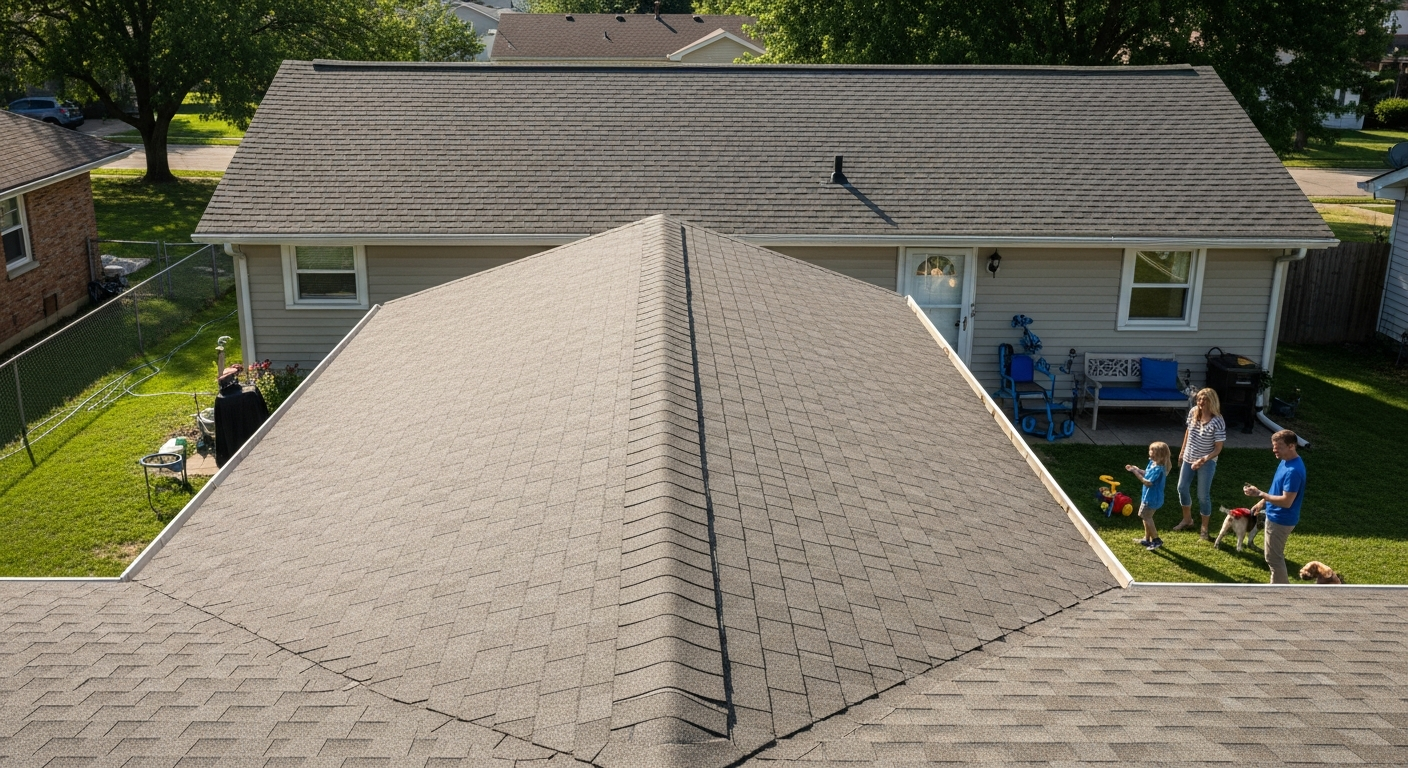
Trill Roofing’s approach to subtle hail damage starts with understanding Wood River’s specific housing characteristics. Andy Pfleger knows that most homes in the Roxana-Wood River area feature hip roof designs that shed water quickly under normal conditions but concentrate stress at ridge lines during severe weather. His team uses drone technology to document impact marks that aren’t visible from ground level — essential for insurance claims in Madison County.
The assessment process focuses on what insurance adjusters often miss during quick inspections. Trill Roofing checks for exposed mat along shingle edges, tests for loosened granules by running fingers across suspected impact areas, and documents the pattern of damage relative to storm direction. One recent case involved a home on Ferguson Avenue where the homeowner noticed no obvious damage after April storms, but Trill’s inspection revealed extensive bruising on the south-facing slope that would have led to significant leaks by mid-summer.
Their documentation includes detailed photos with measurement references, GPS coordinates for damage locations, and correlation with National Weather Service storm reports for the specific date and time. This thoroughness has helped Wood River homeowners secure insurance coverage for repairs that might otherwise be denied due to the subtle nature of the damage.
Professional Roof Leak Repair in Summer Wood River Weather
When subtle spring hail damage becomes summer leak problems, Wood River homeowners face urgent repair needs during the area’s hottest, most humid months. The key is addressing not just the visible symptoms but the underlying hail damage that created the vulnerability. Trill Roofing’s repair approach accounts for Wood River’s specific climate challenges — high humidity that slows drying, frequent afternoon thunderstorms, and heat that makes temporary fixes fail quickly.
Summer repairs in Wood River require careful timing around weather patterns. The area’s location in the Mississippi River valley means afternoon storms develop quickly, often with little warning. Professional repairs need to be completed in weather windows that allow proper sealant curing and material adhesion. Andy Pfleger’s team monitors local weather radar closely and often starts work early in the morning to complete critical repairs before typical afternoon storm development.
For Wood River homeowners dealing with storm damage roof repair, the focus shifts from temporary patches to comprehensive solutions that address the root cause. This often involves replacing entire sections of hail-damaged shingles rather than attempting spot repairs that will fail when the next storm hits. The team’s experience with Wood River’s housing stock means they understand which repair methods work long-term in the area’s specific climate conditions.
Most insurance companies give Wood River homeowners one year from the storm date to file claims for discovered damage. Trill Roofing helps document the connection between spring hail events and summer leak problems, using weather service records and photographic evidence to establish the timeline. Their direct relationships with major carriers like State Farm and Allstate — both popular in Madison County — streamline the claims process for homeowners who discover damage months after the initial storm.
The repair process also considers Wood River’s building patterns. Many homes feature inadequate attic ventilation that compounds moisture problems from hail-damaged shingles. Comprehensive repairs often include ventilation upgrades that prevent future issues. Additionally, homes with original gutters from the 1970s and 1980s may need gutter system updates to handle increased water flow from compromised roofing materials.
Understanding the progression from subtle spring hail damage to costly summer repairs helps Wood River homeowners take proactive steps. The key is recognizing that hail damage often appears minor initially but creates cascading problems as weather stresses the compromised materials. Professional assessment within weeks of storm events, rather than waiting for leaks to develop, prevents the emergency situations that cost homeowners thousands more in repairs and interior damage restoration.
For Wood River residents dealing with suspected hail damage, contact Trill Roofing for a comprehensive inspection that documents subtle damage before it becomes a major problem. Andy Pfleger’s team provides detailed assessments that help homeowners understand their roof’s condition and work effectively with insurance companies to address storm-related issues. Their experience with Madison County’s weather patterns and housing characteristics ensures repairs that last in Wood River’s challenging climate conditions.
Frequently Asked Questions

How long after a hail storm can I file an insurance claim in Wood River?
Most insurance companies give Wood River homeowners one year from the documented storm date to file claims for hail damage. However, it’s better to contact your insurer within 30-60 days of discovering damage. Trill Roofing helps homeowners document the connection between specific storm events and roof damage using National Weather Service reports for Madison County. The key is establishing that damage occurred during a documented hail event, which becomes easier with prompt professional assessment and photographic evidence.
What hail size typically damages asphalt shingles on Wood River homes?
Hail larger than one inch in diameter usually causes noticeable damage to standard asphalt shingles, but even quarter-sized hail can create subtle damage that leads to problems later. Wood River’s older homes with three-tab shingles are more vulnerable than newer architectural shingles, but both types can suffer granule loss and mat exposure from moderate hail impacts. The National Weather Service reported hail up to 1.75 inches in parts of Madison County during the March 2024 storms, which definitely caused damage that many homeowners haven’t discovered yet.
Why do Wood River homes develop roof leaks months after hail storms?
Wood River’s climate creates conditions for delayed leak development after hail damage. Spring hail compromises shingle integrity by removing protective granules and creating small fractures in the mat material. During summer, temperatures regularly exceeding 90°F cause damaged shingles to expand and contract, widening the initial damage points. Combined with Wood River’s high humidity and frequent afternoon thunderstorms, these compromised areas eventually allow water penetration. The process typically takes 2-4 months, which is why many homeowners first notice leaks in July or August after March and April hail events.