Homeowners in Granite City’s Liberty Heights and Nameoki neighborhoods often discover shingle blisters after the first warm spring days, when temperatures jump from the 40s to 80s in a matter of days. These bubble-like formations on asphalt shingles look minor but signal deeper problems that can lead to leaks and premature roof failure. Andy Pfleger and the team at Trill Roofing have diagnosed hidden roof shingle blistering in Granite City for years, particularly on homes built in the 1980s and 1990s with lower-grade three-tab shingles.
What to Check After Spring Temperature Spikes in Granite City
- Walk around your home and look up at the roof from all angles for bubble-like formations on shingle surfaces
- Check your attic during the next sunny afternoon for hot spots or inadequate ventilation airflow
- Examine gutters for granule accumulation, which increases when blistered shingles shed material
- Document any blisters with photos and note their size – anything larger than a quarter needs professional assessment
- Schedule a roof inspection if your home was built between 1980-2000 and hasn’t had ventilation upgrades
- Review your homeowner’s insurance policy for heat damage coverage before filing any claims
Why Illinois Heat Cycles Create Asphalt Shingle Blisters
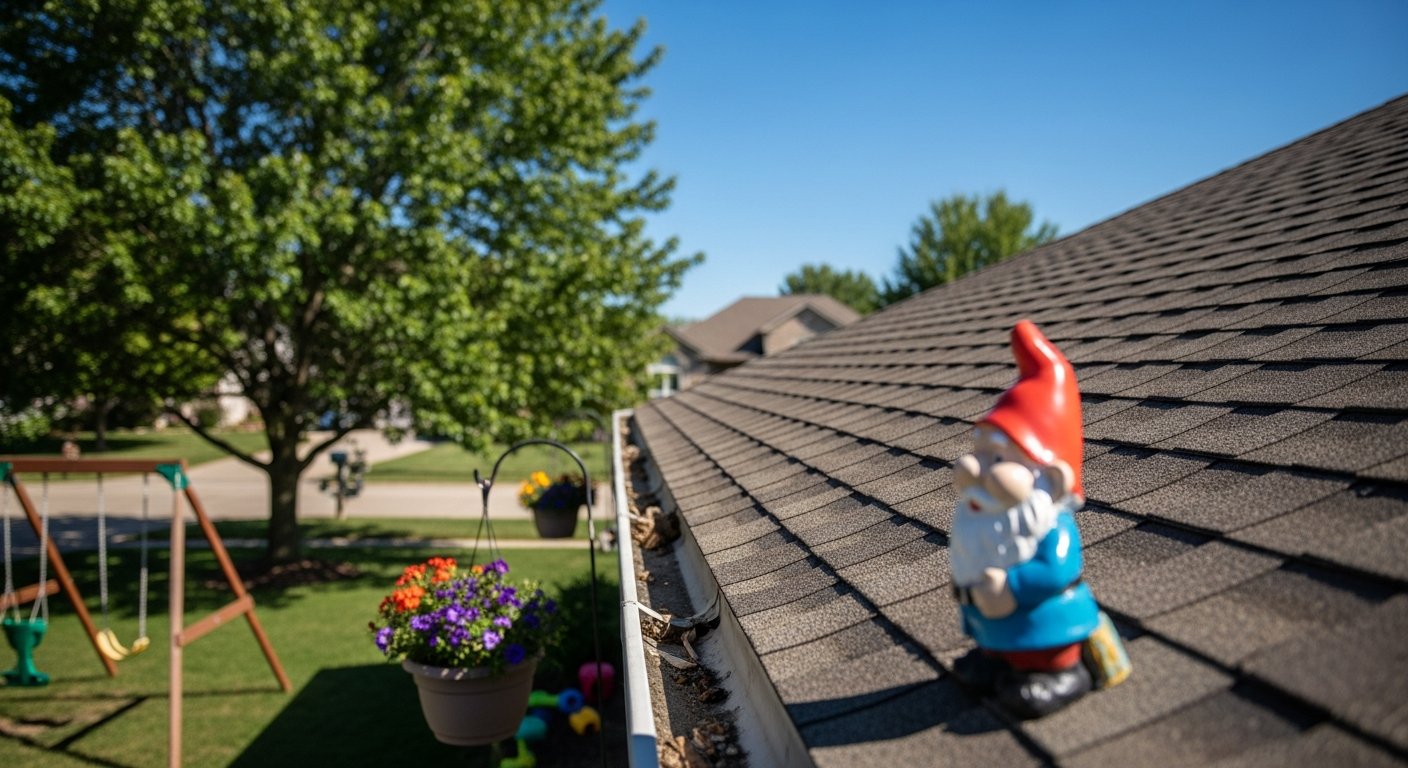
Asphalt shingle blisters form when moisture trapped during manufacturing or installation vaporizes rapidly under intense heat. The process works like a pressure cooker – water molecules expand into steam and push up through the shingle’s surface layer, creating those telltale bubbles.
According to NOAA climate data, the St. Louis metropolitan area, which includes Granite City, experiences average temperature swings of 35-40 degrees between March lows and May highs. These rapid transitions stress asphalt materials that weren’t designed for such dramatic changes. Research from the Asphalt Roofing Manufacturers Association shows that shingles manufactured before 1995 used organic felt backing that absorbed moisture more readily than modern fiberglass mats.
The blistering process accelerates when attic temperatures exceed 140°F, which happens regularly in Illinois homes with poor ventilation. Think of it like leaving a sealed water bottle in your car on a hot day – the trapped moisture has nowhere to go except up and out through the weakest point in the material.
Granite City’s Climate Makes Heat Damage Roof Problems Worse
Granite City sits in the Mississippi River floodplain, creating unique conditions that amplify asphalt shingle blisters in Illinois. The area’s high humidity levels, often reaching 70-80% during spring and summer months, mean more moisture gets trapped in roofing materials during installation.
Homes in the Lincoln Place and Pontoon Beach areas face additional challenges due to their proximity to the river and industrial facilities. The Madison County soil survey identifies much of Granite City as having “poorly drained soils” with high clay content, which retains moisture and increases local humidity around homes. This creates a microclimate where shingles absorb more water vapor than in drier regions.
Temperature data from the Illinois State Climatologist Office shows Granite City experiences an average of 45 days per year with temperatures above 85°F, with peak attic temperatures often reaching 160°F in poorly ventilated homes. The combination of river valley humidity and industrial heat islands in neighborhoods near the steel mills creates perfect conditions for moisture entrapment in roofing materials.
Buildings constructed in Granite City’s post-war housing boom, particularly in the Fairmont Park and Wilson Park neighborhoods, typically lack modern ventilation standards. Most homes from this era have minimal ridge venting and rely on small gable vents that don’t provide adequate airflow for today’s climate conditions.
Signs Your Granite City Home Has Hidden Roof Damage
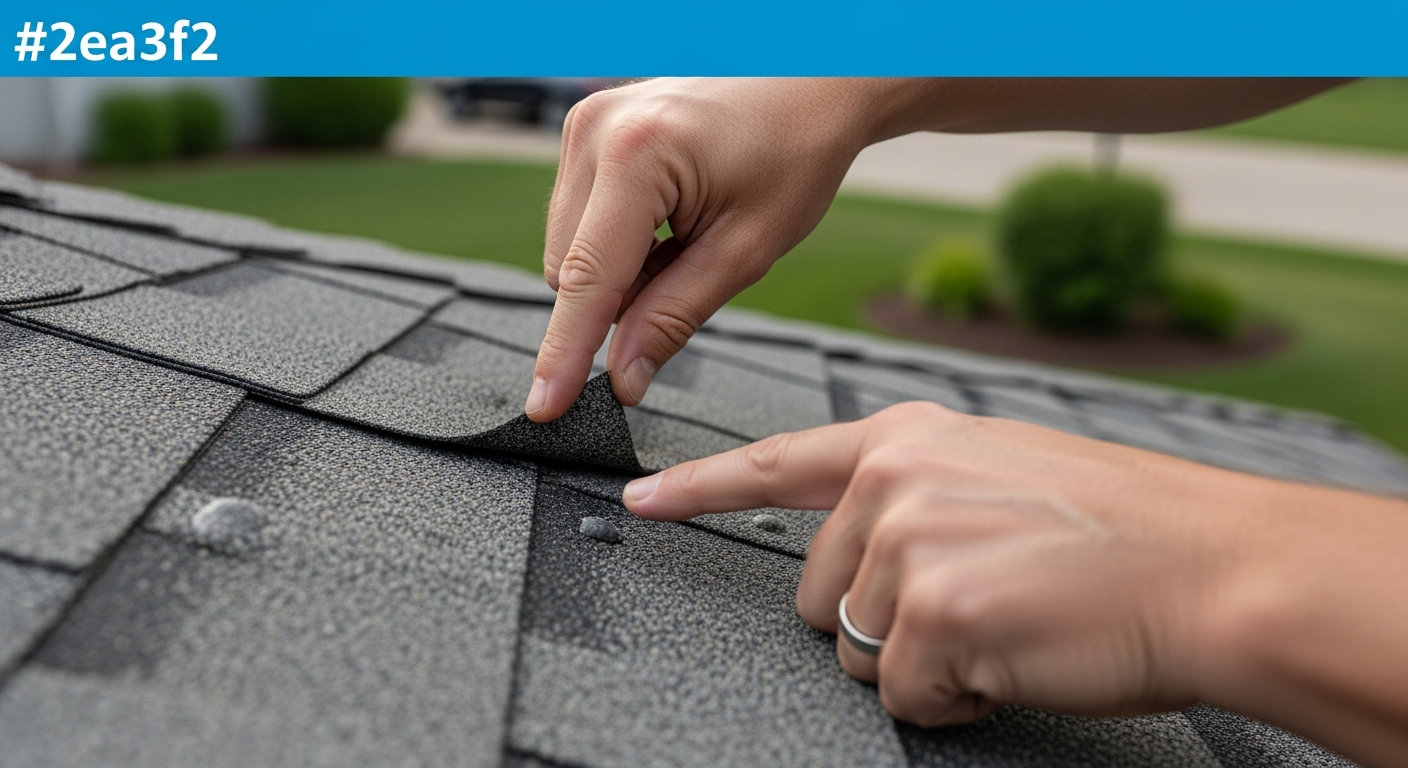
Look for shingle surfaces that appear raised or bubbled, especially on south and west-facing slopes that get the most direct sunlight. These blisters often start small – about the size of a dime – but expand as temperatures rise throughout spring and summer.
Check your attic on sunny afternoons for excessive heat buildup. If the air feels oppressive or you see condensation on the underside of roof decking, your ventilation system isn’t handling moisture properly. Andy Pfleger from Trill Roofing regularly finds attic temperatures exceeding 150°F in Granite City homes during routine inspections, particularly in older homes along Madison Avenue and State Street where original ventilation was never upgraded.
How Trill Roofing Addresses Shingle Blistering in the Riverbend Area

Trill Roofing’s approach starts with a comprehensive attic ventilation assessment using thermal imaging to identify hot spots and moisture patterns. Andy personally inspects each roof to determine whether blisters resulted from manufacturing defects, installation moisture, or inadequate ventilation – each cause requires different solutions.
For homes with widespread blistering, the team typically recommends upgrading to GAF architectural shingles with improved moisture resistance, combined with enhanced ridge and soffit ventilation systems. Their GAF Master Elite certification means they can offer extended warranties on materials specifically designed for Illinois climate conditions.
Last spring, Trill Roofing worked with a homeowner in Granite City’s Nameoki neighborhood whose 1987 ranch home had developed extensive blistering on the south-facing slope. The inspection revealed inadequate ventilation and organic-mat shingles that had absorbed moisture during a wet installation period 15 years earlier. Andy’s crew installed new architectural shingles with a complete ventilation upgrade, solving both the immediate blistering problem and preventing future heat damage.
The team also addresses the underlying causes by installing proper intake and exhaust ventilation that creates consistent airflow. This prevents the extreme temperature buildup that turns minor moisture issues into major blister problems.
Understanding the specific causes of shingle blistering in Granite City’s climate helps homeowners make informed decisions about roof repair and replacement options. While blisters might seem cosmetic, they compromise your roof’s long-term performance and can void manufacturer warranties if left untreated. For residents dealing with heat damage to their roof in Granite City, addressing both the symptoms and underlying ventilation issues prevents costly problems down the road.
Frequently Asked Questions
What causes hidden roof shingle blistering in Granite City IL homes?
Hidden roof shingle blistering in Granite City typically results from moisture trapped during manufacturing or installation that vaporizes when attic temperatures exceed 140°F. The area’s high humidity from the Mississippi River floodplain, combined with temperature swings of 35-40 degrees between spring and summer, creates ideal conditions for blister formation. Older homes built between 1980-2000 with organic-felt shingles are particularly susceptible because these materials absorb moisture more readily than modern fiberglass alternatives.
How do I know if my Granite City home has heat damage roof problems?
Look for bubble-like formations on your shingles, especially on south and west-facing slopes. Check your attic during sunny afternoons for excessive heat – temperatures above 140°F indicate ventilation problems. Other signs include granule accumulation in gutters and condensation on roof decking undersides. Homes in Lincoln Place, Pontoon Beach, and Wilson Park neighborhoods should be inspected annually due to their proximity to the river and higher humidity levels.
Can asphalt shingle blisters in Illinois be repaired or do they require replacement?
Small blisters (quarter-size or smaller) can sometimes be individually repaired if caught early, but widespread blistering typically requires shingle replacement. The underlying ventilation issues must also be addressed, or new shingles will develop the same problems. Trill Roofing’s experience shows that homes with multiple blisters usually benefit from upgrading to modern architectural shingles with improved moisture resistance, combined with enhanced ventilation systems that prevent future heat damage.
What’s the difference between normal aging and blister damage on Granite City roofs?
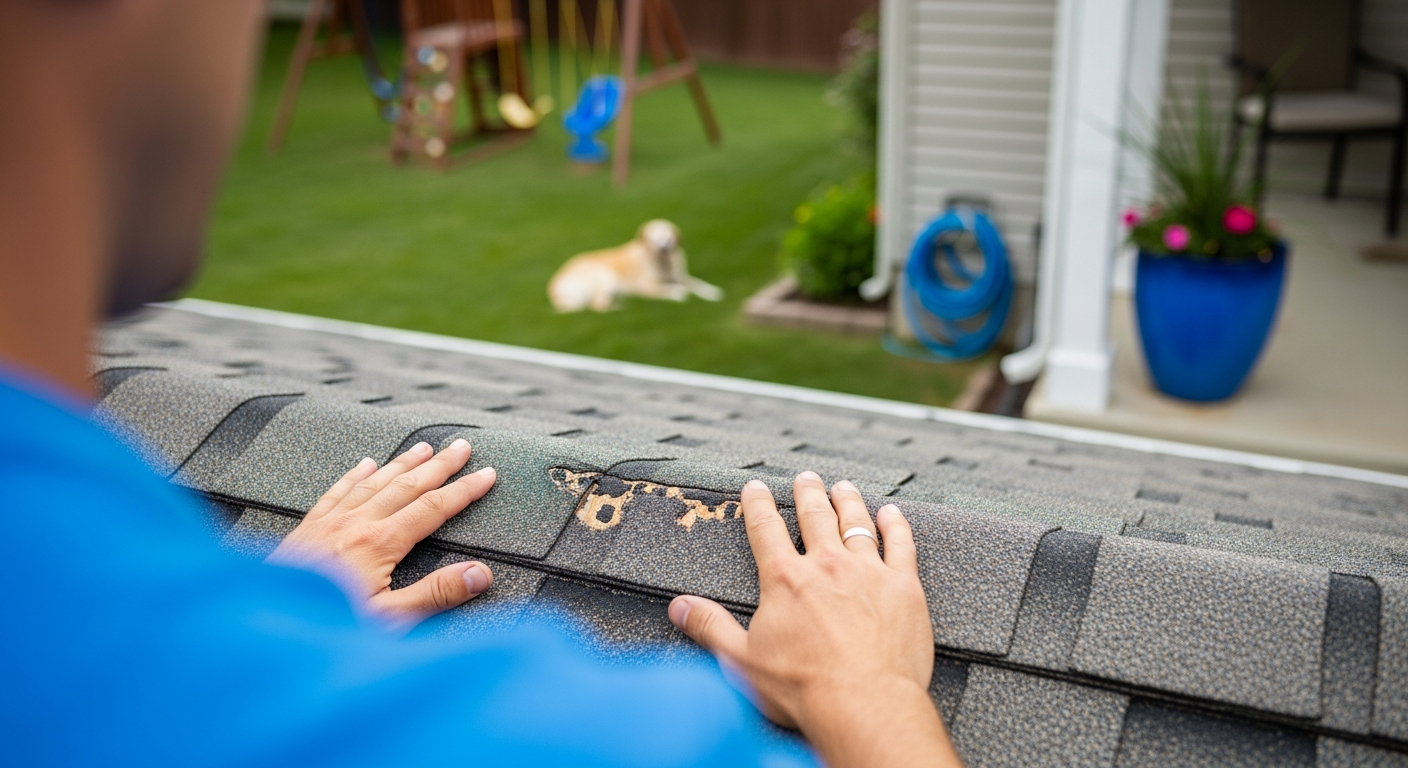
Normal aging shows gradual granule loss and slight color fading across the entire roof surface. Blistering creates distinct raised areas that feel spongy when pressed and often appear in clusters on the hottest roof sections. In Granite City’s climate, normal 20-year shingles might show aging after 15 years, but blistering can occur within 5-10 years if moisture and heat issues aren’t controlled. The key difference is that aging happens uniformly while blisters appear in specific problem areas.
When should I call a professional for roof repair for shingle blisters?
Contact a roofing professional immediately if you find blisters larger than a quarter, multiple blisters in one area, or any blisters that have broken open and exposed the underlying material. Don’t wait if your home was built before 1995 with original shingles, as these older materials are more prone to sudden failure. Schedule annual inspections for homes in Granite City’s river-adjacent neighborhoods where humidity accelerates deterioration.
How much does it cost to fix shingle blistering problems in the Riverbend area?
Repair costs vary significantly based on the extent of damage and underlying causes. Individual blister repairs might cost $200-500, but widespread blistering often requires partial or complete roof replacement ranging from $8,000-15,000 for typical Granite City homes. Ventilation upgrades add $1,500-3,000 but prevent future problems. Trill Roofing provides detailed assessments that help homeowners understand whether repairs or replacement offer better long-term value for their specific situation.