When a Madison County storm rolls through, roof problems do not always show up as a dramatic hole in the ceiling. More often, the warning signs are subtle: lifted shingles, loose flashing, granules in the gutters, a new water stain, or a leak that only appears during wind-driven rain. For homeowners in Godfrey, Alton, Bethalto, Edwardsville, Granite City, Glen Carbon, Wood River, and the surrounding Metro East, knowing what to check after severe weather can help prevent a small roof repair from becoming a larger replacement conversation. roofing services in Alton roofing services in Bethalto roofing services in Brighton roofing services in East Alton roofing services in Edwardsville roofing services in Elsah roofing services in Godfrey roofing services in Glen Carbon roofing services in Grafton roofing services in Jerseyville
This guide explains the roof repair issues Madison County homeowners should watch for, when a repair needs professional attention, and how Trill Roofing approaches inspections with a local, no-pressure process.
Storm Damage Signs Madison County Homeowners Should Not Ignore
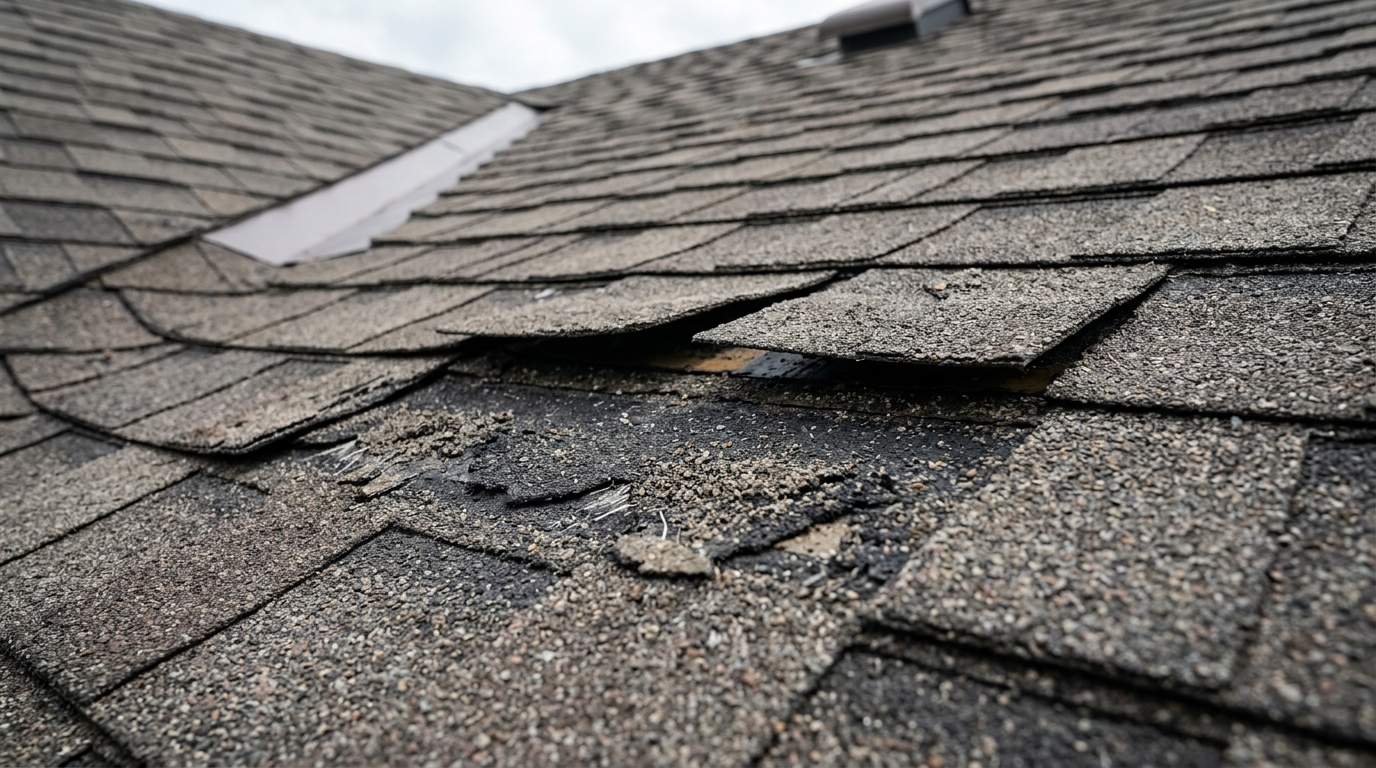
Hail, strong wind, heavy rain, and freeze-thaw cycles can all create roof damage that is easy to miss from the ground. A shingle may look mostly intact, but if the seal has broken or the edge is lifted, water can work underneath during the next storm. Hail can also knock protective granules loose, shortening the life of the shingle even when there is no immediate leak.
After a storm, look for shingles that appear curled, creased, cracked, or missing. Check gutters and downspouts for heavy granule buildup. Walk the perimeter of the home and look for pieces of shingle, ridge cap, fascia, or flashing on the ground. Inside, check ceilings, attic decking, and wall corners for new stains or damp insulation. If you see any of these signs, it is worth scheduling a roof inspection before the next round of rain.
Madison County homeowners should be especially cautious after wind-driven storms because damage can be directional. One slope may take most of the impact while the rest of the roof appears normal. That is one reason a professional inspection is more reliable than a quick ground-level glance.
Leaks Often Start Around Flashing, Vents, Valleys, and Roof Edges
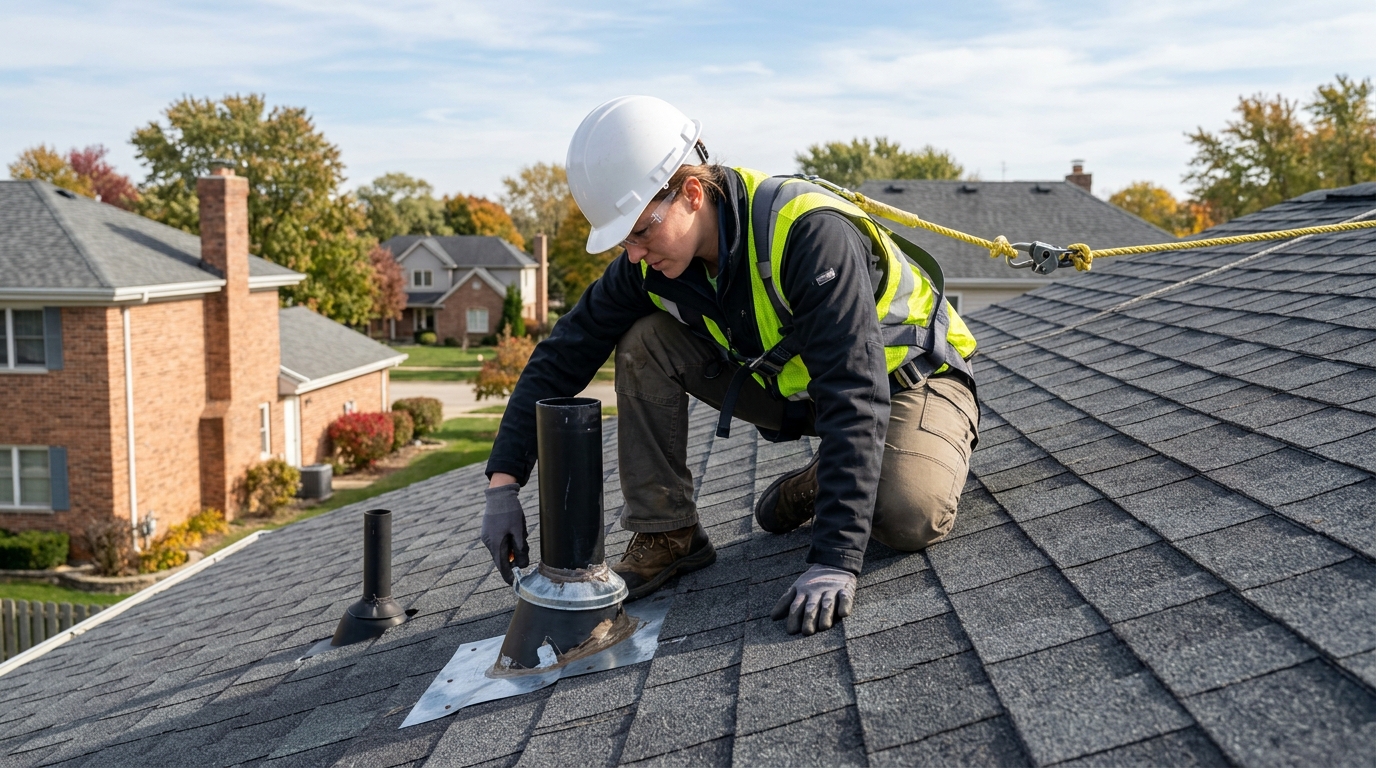
Not every leak means the whole roof has failed. Many repair calls start with a vulnerable detail: a pipe boot, chimney flashing, wall flashing, skylight curb, roof valley, ridge cap, or roof edge. These areas rely on proper installation and seal integrity. Once flashing pulls loose or sealant breaks down, water can travel under shingles and show up far from the original entry point.
That is why leak diagnosis should be handled carefully. Patching the ceiling stain or applying caulk from the outside may hide the symptom without solving the water path. A qualified roofer will look at the roof surface, penetrations, attic conditions, decking, ventilation, and drainage patterns to identify what actually needs repair.
If water is actively entering the home, treat the situation as urgent. Move belongings away from the leak, contain the water if it is safe to do so, and document the damage with photos. Then call a local roofing contractor who can inspect the roof and explain whether the issue is a targeted repair, storm-related damage, or a sign of broader roof age.
When Roof Repair Is Enough — and When Replacement Should Be Discussed
A good roof repair recommendation should be based on the condition of the roof, not pressure. In many cases, a localized repair is the right answer: a small section of missing shingles, a failed pipe boot, loose flashing, or a limited leak around one penetration. If the surrounding shingles are still in good shape and the decking is sound, repairing the affected area may be the most practical next step.
Replacement becomes a more serious conversation when damage is widespread, the roof is near the end of its service life, there are multiple leak points, or the shingles have lost too much protective granule coverage. Repeated repairs can also become a warning sign. If a roof needs patch after patch every storm season, the homeowner deserves an honest comparison of repair cost, remaining roof life, warranty implications, and replacement timing.
For Madison County homeowners, local weather matters. Heat, humidity, severe thunderstorms, winter freeze-thaw cycles, and spring hail all add stress to the roof system. A repair that looks inexpensive today should still be evaluated in the context of how the roof is likely to perform through the next few seasons.
What to Expect From a Local Roof Repair Inspection

A professional roof repair inspection should give you clarity. At Trill Roofing, the goal is to identify the issue, explain the options, and provide a written estimate when repair work is recommended. Homeowners should expect the roofer to document visible damage, inspect common leak points, review the age and condition of the roof, and answer questions in plain language.
If storm damage may be involved, documentation is especially important. Photos, notes, and a clear repair scope can help homeowners understand what happened and what may need to be shared with an insurance adjuster. The roofing contractor should not promise claim outcomes, but they can help document roof conditions and explain the repair or replacement findings.
Before approving any roof repair, ask what materials will be used, whether the repair will match the existing roof as closely as possible, whether decking or flashing may need attention, and how the contractor will protect the home during the work. A written estimate should make the scope clear enough that you know what is included and what would require approval as an additional finding.
Why Madison County Homeowners Choose a Local Roofer
Roof repair is local work. A contractor who regularly serves Madison County understands the storm patterns, common roof ages, neighborhood home styles, and the urgency homeowners feel when water is getting inside. Local accountability also matters after the repair is complete. If a question comes up later, you want a company that serves the area year-round — not a storm-chasing crew that disappears after the season.
Trill Roofing is locally owned in Godfrey, IL and serves homeowners throughout Madison County and the surrounding Riverbend and Metro East communities. The team emphasizes free inspections, written estimates, licensed and bonded service, and straightforward guidance without high-pressure sales tactics.
Schedule a Free Roof Repair Inspection in Madison County, IL
If you have missing shingles, a roof leak, storm damage concerns, or signs of wear after a recent storm, do not wait for the next heavy rain to test the roof. Trill Roofing can inspect the issue, explain whether repair is appropriate, and provide a written estimate for the recommended work.
Schedule a free roof inspection or learn more about roof repair services from Trill Roofing.
FAQs About Roof Repair in Madison County, IL
How do I know if I need roof repair after a storm?
Look for missing or lifted shingles, granules in the gutters, loose flashing, leaks, ceiling stains, or debris from roofing materials around the home. If anything looks different after a storm, schedule an inspection before the next rainfall.
Can a small roof leak be repaired without replacing the roof?
Often, yes. If the leak is isolated to flashing, a vent boot, a small shingle section, or another localized detail, repair may be enough. The key is confirming that the surrounding roof and decking are still in good condition.
Should I call a roofer before contacting insurance?
Many homeowners start with a roof inspection so they understand the condition of the roof and have documentation. A roofer can document visible storm damage and explain repair needs, while your insurance company determines claim coverage.
Does Trill Roofing serve all of Madison County?
Trill Roofing serves Godfrey and surrounding Madison County / Metro East communities, including nearby areas such as Alton, Bethalto, Edwardsville, Glen Carbon, Granite City, Wood River, and more.
Related Articles
Related: Storm Damage Signs Every St. Louis Homeowner Should Check After a Thunderstorm
Related article: Fosterburg IL Wind Storm Damage: Hidden Roof Issue
Key takeaways
- FAQs About Roof Repair in Madison County, IL: Look for missing or lifted shingles, granules in the gutters, loose flashing, leaks, ceiling stains, or debris from roofing materials around the home.
Is Trill Roofing licensed and insured in Illinois?
Yes. Trill Roofing holds Illinois roofing contractor license #104.020330 through IDFPR and carries general liability and workers compensation insurance.
- An IDFPR license number you can verify online before work starts
- A current general liability insurance certificate
- Workers compensation coverage for the crew on the roof
- A written, itemized estimate rather than a verbal number
Does Trill Roofing offer free roof inspections?
Yes. Roof inspections are free and produce a written report with photos and a prioritized repair list. A standard inspection documents:
- Shingle condition, including granule loss, curling, and missing shingles
- Flashing at chimneys, sidewalls, valleys, and pipe boots
- Attic ventilation balance between intake and exhaust
- Gutters and downspouts, including separation from the fascia
What areas does Trill Roofing serve?
Trill Roofing works out of 2705 St Ambrose Dr in Godfrey, IL and serves Madison County and the Riverbend with no trip surcharge inside the primary service area:
- Godfrey, Alton, Bethalto, and Brighton
- Edwardsville, Glen Carbon, Maryville, and Troy
- Wood River, East Alton, Roxana, and Hartford
- Jerseyville, Grafton, Elsah, and Cottage Hills
- Collinsville, Granite City, Hamel, Marine, and Worden
What roofing materials does Trill Roofing install?
Trill Roofing installs both residential and commercial roofing systems:
- Architectural (laminate) asphalt shingles in 20+ colors
- Class 4 impact-resistant shingles, which qualify for insurance discounts
- Standing seam metal panels, metal shingles, and exposed-fastener panels
- TPO and EPDM membrane for commercial flat and low-slope roofs
- Seamless aluminum gutters in 5-inch and 6-inch K-style
How do you file a storm damage roof claim in Illinois?
Trill Roofing handles the documentation side of an Illinois storm damage claim:
- A free post-storm inspection with photo documentation
- An adjuster meet on the roof to agree the scope on-site
- Supplemental documentation when the first settlement misses items
- Direct payment coordination, so the homeowner pays the deductible only