Skylights in Collinsville homes face problems from Illinois weather patterns. Spring storms bring hail and wind that can crack flashing around skylight frames, while summer heat causes expansion that opens gaps in weatherproofing. Andy Pfleger and the Trill Roofing team see these problems regularly across the Riverbend area, where temperature swings from 20°F winters to 90°F summers stress every roof penetration. These issues often overlap with broader roof replacement warning signs homeowners should not ignore, especially when older roofing systems face repeated Midwest storm cycles. For more details, see our guide on professional. For more details, see our guide on roofing.
What to Do About Skylight Problems in Collinsville
- Check skylight frames for water stains or mineral deposits after every storm
- Look for cracked or separated flashing around the skylight base from ground level
- Monitor attic spaces below skylights for moisture or discoloration on rafters
- Document any visible damage with photos before calling for professional inspection
- Schedule annual skylight inspections as part of regular roof maintenance
- Keep gutters clear to prevent water backup that can reach skylight seals
How Spring Storms Damage Skylight Systems
For more details, see our guide on staunton.
For more details, see our guide on roof.
For more details, see our guide on roof.
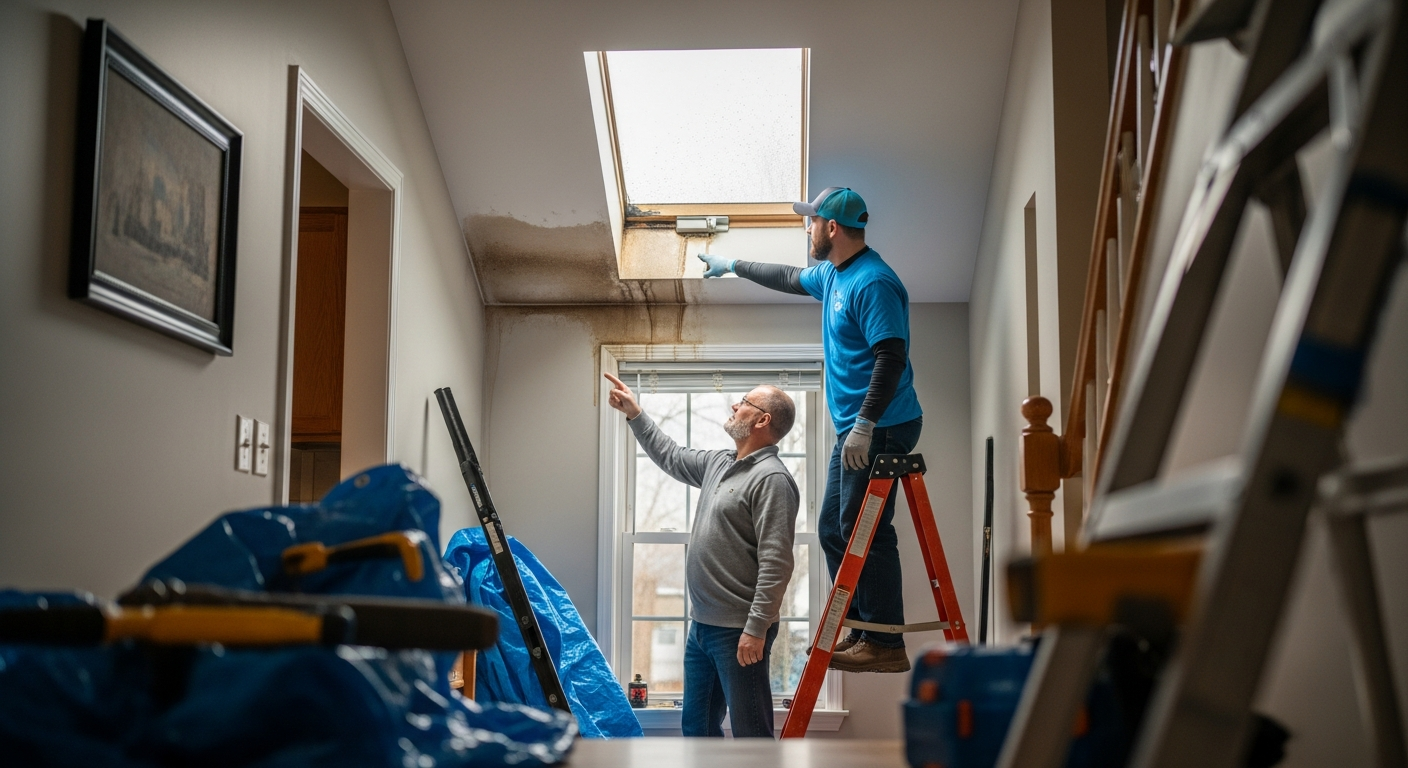
Storm damage skylight Collinsville incidents spike between March and June when severe weather moves through Madison County. National Weather Service data shows the St. Louis metro area, including Collinsville, averages 15 severe thunderstorm events annually, with wind gusts exceeding 60 mph and hail larger than quarter-size.
Skylight flashing takes the biggest hit during these storms. The metal strips that seal the connection between your skylight frame and roof deck expand and contract with temperature changes. When hail impacts these areas or high winds lift shingle edges around the flashing, water finds its way underneath. The problem compounds because skylight installations create natural low spots where debris accumulates, holding moisture against vulnerable seals.
Most Collinsville homes built between 1980 and 2010 have skylights installed with older flashing techniques that relied heavily on roof cement rather than integrated step flashing systems. These installations become brittle after 15-20 years of Illinois weather cycles, making them particularly susceptible to storm damage.
Summer Heat Skylight Problems in Madison County
Summer heat skylight problems develop differently than storm damage but prove just as destructive over time. Collinsville temperatures regularly exceed 90°F from June through August, with roof surface temperatures reaching 140°F on asphalt shingles. Illinois State Climatologist data confirms the region has experienced increasingly intense heat periods, with 15% more days above 95°F compared to 1990s averages.
Heat expansion affects every component of skylight installations. The skylight frame itself expands at a different rate than surrounding roofing materials, creating gaps in previously tight seals. Rubber gaskets dry out and crack under sustained heat exposure. Metal flashing expands and pulls away from step joints where it meets shingles.
The worst damage occurs during rapid temperature changes common in Illinois summers. A 95°F afternoon followed by a 65°F night with thunderstorms creates expansion-contraction cycles that stress skylight seals beyond their design limits. Many skylight leak repair Collinsville IL calls come after these dramatic weather swings, when previously minor seal problems become active leaks.
Signs of Leaky Skylight Illinois Homeowners Miss

Signs of leaky skylight Illinois problems often appear far from the skylight itself. Water follows roof deck seams, runs along rafters, and emerges in unexpected locations. Check ceiling areas within 10 feet of any skylight for subtle discoloration or texture changes that indicate moisture intrusion.
Mineral deposits around skylight frames signal repeated wet-dry cycles where water enters and evaporates, leaving behind dissolved minerals from roofing materials. These white or yellowish stains appear months before visible water damage and indicate failing seals that need immediate attention.
Attic inspections reveal the most telling signs. Look for dark staining on roof sheathing around skylight openings, particularly along the uphill side where wind-driven rain penetrates most easily. Insulation that appears compressed or discolored below skylights has absorbed repeated moisture intrusion, reducing its effectiveness and creating conditions for mold growth.
Professional Skylight Repair in Collinsville

Skylight leak repair Collinsville IL requires understanding both the specific skylight manufacturer’s installation requirements and local building codes. Andy Pfleger approaches each skylight repair by first determining whether the problem stems from flashing failure, skylight frame damage, or surrounding roof deterioration. His team removes shingles around the entire skylight perimeter to inspect the underlying flashing system completely.
Proper skylight flashing repair Collinsville jobs involve installing new step flashing that integrates with the roof’s water management system rather than simply sealing over existing problems. This process requires removing and reinstalling shingles in a specific sequence to ensure each piece of flashing sheds water to the piece below it. Trill Roofing’s GAF Master Elite certification includes training on skylight integration with modern roofing systems.
One recent customer in Collinsville’s Eastgate neighborhood contacted Trill Roofing after noticing water stains spreading across their family room ceiling. Andy’s inspection revealed the skylight flashing had separated from the roof deck during a spring hailstorm, allowing water to run underneath shingles for several months. The repair involved replacing damaged sheathing, installing new integrated flashing, and coordinating the skylight weatherproofing with new architectural shingles that matched the existing roof.
Professional repairs also address the thermal movement issues that cause recurring problems. Modern skylight installations include expansion joints and flexible sealing materials designed to accommodate the temperature extremes common in Illinois. The investment in proper materials and installation techniques prevents the cycle of temporary fixes that many homeowners experience with skylight problems.
Skylight Repair Cost Collinsville Factors
Skylight repair cost Collinsville projects varies based on accessibility, extent of water damage, and whether surrounding roofing materials need replacement. Simple flashing repairs typically range from $400-800, while complete skylight replacement with new flashing systems costs $800-1,500 per skylight. These prices reflect the specialized materials and techniques required for watertight installations that withstand Illinois weather patterns.
Insurance coverage often applies to storm-damaged skylights when the damage results from covered perils like hail or wind. Trill Roofing works directly with major insurance providers including State Farm and Allstate to document skylight damage and coordinate repairs with roof replacement projects when multiple systems need attention.
If you notice any signs of skylight problems around your Collinsville home, contact Trill Roofing for a comprehensive roof inspection that evaluates both immediate repair needs and long-term skylight performance. Their team provides detailed documentation of skylight conditions and recommendations for addressing both current problems and preventing future issues. For emergency skylight leaks, Andy Pfleger responds quickly to minimize water damage while planning permanent roof repair solutions.
Frequently Asked Questions
How long do skylight repairs last in Illinois weather?
Professional skylight flashing repair Collinsville installations using modern materials and techniques typically last 15-20 years when properly maintained. The key factors are using integrated step flashing rather than roof cement seals, installing expansion joints for thermal movement, and ensuring proper shingle integration around the skylight perimeter. Annual inspections help identify minor seal problems before they become major leaks.
Should I repair or replace a leaking skylight on my Collinsville home?
Skylights over 15 years old with recurring leak problems usually benefit from complete replacement rather than repeated repairs. Modern skylight designs include better thermal breaks, improved flashing systems, and energy-efficient glazing that reduces condensation problems common in older units. If your skylight has leaked multiple times or shows signs of frame deterioration, replacement prevents ongoing water damage and reduces long-term maintenance costs.
Can summer heat damage cause skylights to leak without storm damage?
Yes, thermal expansion from summer heat cycles commonly causes skylight seal failure in Illinois homes. Temperatures above 140°F on roof surfaces cause skylight frames and flashing to expand at different rates, opening gaps in weatherproofing. The problem worsens when rapid cooling from afternoon thunderstorms creates contraction stress on already-compromised seals. Many skylight leak repair Collinsville IL calls follow heat waves rather than severe storms.
Related article: Brighton, IL Homes: How to Spot Hidden Siding Dama
Key takeaways
- How Spring Storms Damage Skylight Systems: Storm damage skylight Collinsville incidents spike between March and June when severe weather moves through Madison County.
- Summer Heat Skylight Problems in Madison County: Summer heat skylight problems develop differently than storm damage but prove just as destructive over time.
- Signs of Leaky Skylight Illinois Homeowners Miss: Signs of leaky skylight Illinois problems often appear far from the skylight itself.
- Professional Skylight Repair in Collinsville: Skylight leak repair Collinsville IL requires understanding both the specific skylight manufacturer’s installation requirements and local building codes.
- Skylight Repair Cost Collinsville Factors: Skylight repair cost Collinsville projects varies based on accessibility, extent of water damage, and whether surrounding roofing materials need replacement.
- Frequently Asked Questions: Professional skylight flashing repair Collinsville installations using modern materials and techniques typically last 15-20 years when properly maintained.
Is Trill Roofing licensed and insured in Illinois?
Yes. Trill Roofing holds Illinois roofing contractor license #104.020330 through IDFPR and carries general liability and workers compensation insurance.
- An IDFPR license number you can verify online before work starts
- A current general liability insurance certificate
- Workers compensation coverage for the crew on the roof
- A written, itemized estimate rather than a verbal number
Does Trill Roofing offer free roof inspections?
Yes. Roof inspections are free and produce a written report with photos and a prioritized repair list. A standard inspection documents:
- Shingle condition, including granule loss, curling, and missing shingles
- Flashing at chimneys, sidewalls, valleys, and pipe boots
- Attic ventilation balance between intake and exhaust
- Gutters and downspouts, including separation from the fascia
What areas does Trill Roofing serve?
Trill Roofing works out of 2705 St Ambrose Dr in Godfrey, IL and serves Madison County and the Riverbend with no trip surcharge inside the primary service area:
- Godfrey, Alton, Bethalto, and Brighton
- Edwardsville, Glen Carbon, Maryville, and Troy
- Wood River, East Alton, Roxana, and Hartford
- Jerseyville, Grafton, Elsah, and Cottage Hills
- Collinsville, Granite City, Hamel, Marine, and Worden
What shingle brands does Trill Roofing install?
Trill Roofing installs GAF, CertainTeed, and Owens Corning shingles, including their Class 4 impact-resistant lines, and is a GAF-listed contractor.