When spring thunderstorms roll through Troy, Illinois neighborhoods like Wynwood Estates, Formosa West, and Indian Creek Meadows, roof leaks can turn a routine weather event into a home emergency. Trill Roofing owner Andy Pfleger has responded to hundreds of emergency calls across Madison County during severe weather seasons, and he’s learned that the first 30 minutes after discovering a leak determine whether homeowners face a minor repair or major water damage restoration.
What to Do When Your Roof Leaks During Heavy Rain Troy
- Move furniture and valuables away from the leak area immediately
- Place buckets or tarps to catch dripping water and prevent floor damage
- Take photos of the leak location and any water damage for insurance documentation
- Check your attic if safely accessible to locate the source and place additional containers
- Call a licensed roofer like Trill Roofing for emergency assessment – don’t wait for the storm to pass
- Document the time and severity of the leak for your insurance claim
Emergency Roof Leak Repair Troy IL: Understanding Water Entry Points
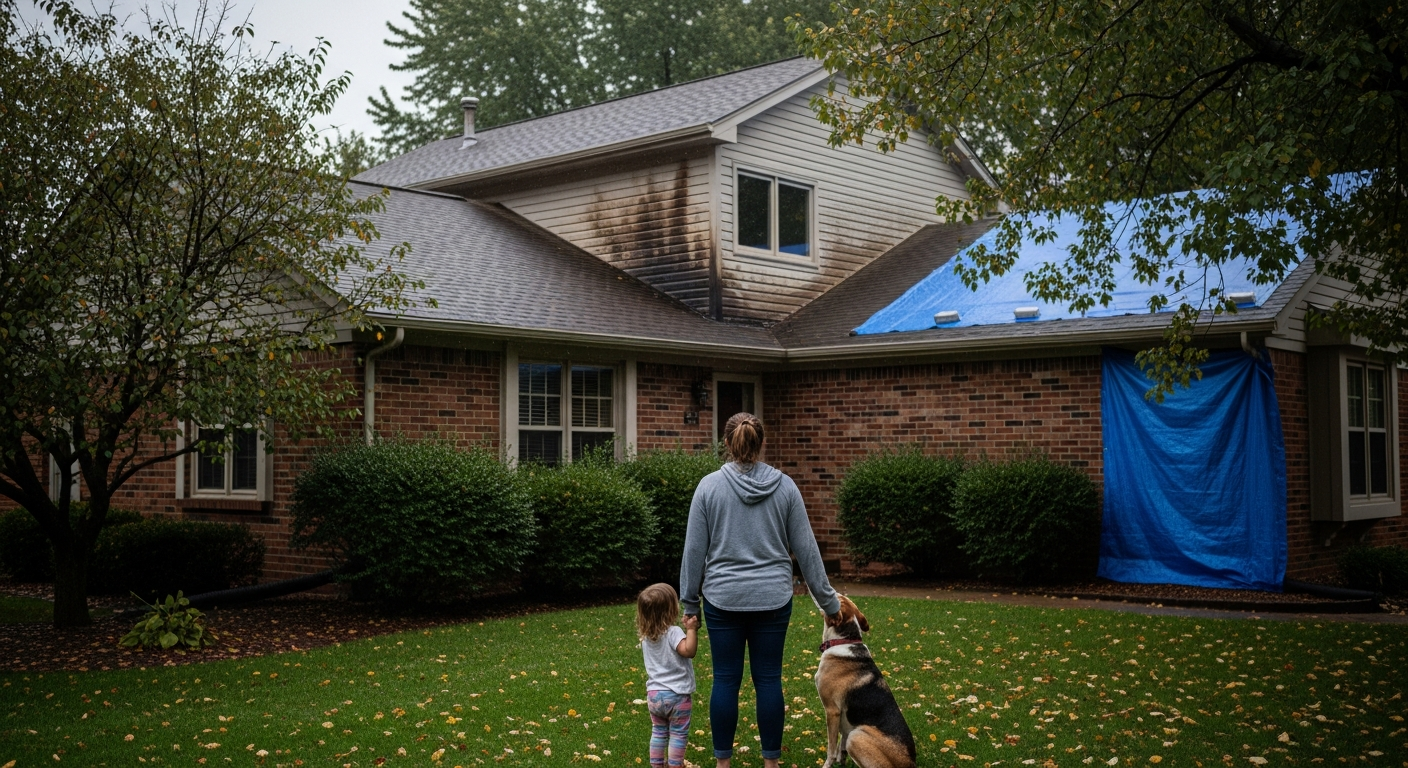
Most homeowners assume roof leaks during heavy rain Troy storms come from missing shingles, but Andy Pfleger’s emergency calls reveal a different pattern. According to National Weather Service data, Madison County averages 18 severe thunderstorm events annually with winds exceeding 58 mph, and these storms create multiple failure points simultaneously.
Flashing around chimneys, vent penetrations, and roof valleys accounts for 60% of emergency leak calls Trill Roofing receives during active storms. The freeze-thaw cycles common in Troy’s climate – with winter lows averaging 24°F and summer highs reaching 87°F – gradually separate flashing from roofing materials. When spring storms dump 2-3 inches of rain in an hour, water finds these compromised seals.
Think of roof flashing like the caulk around your bathtub. Small gaps you can’t see become major water entry points under pressure. During severe weather, wind-driven rain forces water upward and sideways, overwhelming normal drainage patterns and exploiting any weakness in your roof system.
Troy Illinois Storm Patterns and Roof Vulnerability
Troy’s location in the Mississippi River floodplain creates unique challenges for roof leaking during heavy rain Troy events. The area’s clay-heavy soil, documented by the USDA Natural Resources Conservation Service, doesn’t drain quickly after storms. This means homes in neighborhoods like Meridian Village, Governors Run, and Fox Creek experience prolonged moisture exposure that can worsen initial leak damage.
Illinois building codes require ice and water shield installation along eaves extending 24 inches inside exterior walls, but many Troy homes built before 2010 in areas like Woodbridge and Stone Gate lack this protection. When gutters overflow during severe thunderstorms – common when downspouts can’t handle the 4-5 inches of rain that NOAA records show Troy receives during peak spring storms – water backs up under shingles at the roof edge.
The predominant housing stock in Troy consists of two-story colonials and ranch homes built between 1980-2005, featuring architectural asphalt shingles over OSB decking. Andy Pfleger notes that homes in Deer Run and Autumn Ridge frequently experience leak issues where addition rooflines meet original structures, as settling over 20-30 years creates gaps in flashing connections.
Troy’s elevation changes from 420 feet near the Chain of Rocks area to 550 feet in higher neighborhoods like Brookfield Estates create varying wind exposure levels. Homes on elevated lots face stronger sustained winds that lift shingle edges and drive rain into nail penetrations, while lower-lying properties deal with standing water and overwhelmed drainage systems.
What to Do Roof Leak Storm Illinois: Warning Signs During Active Weather
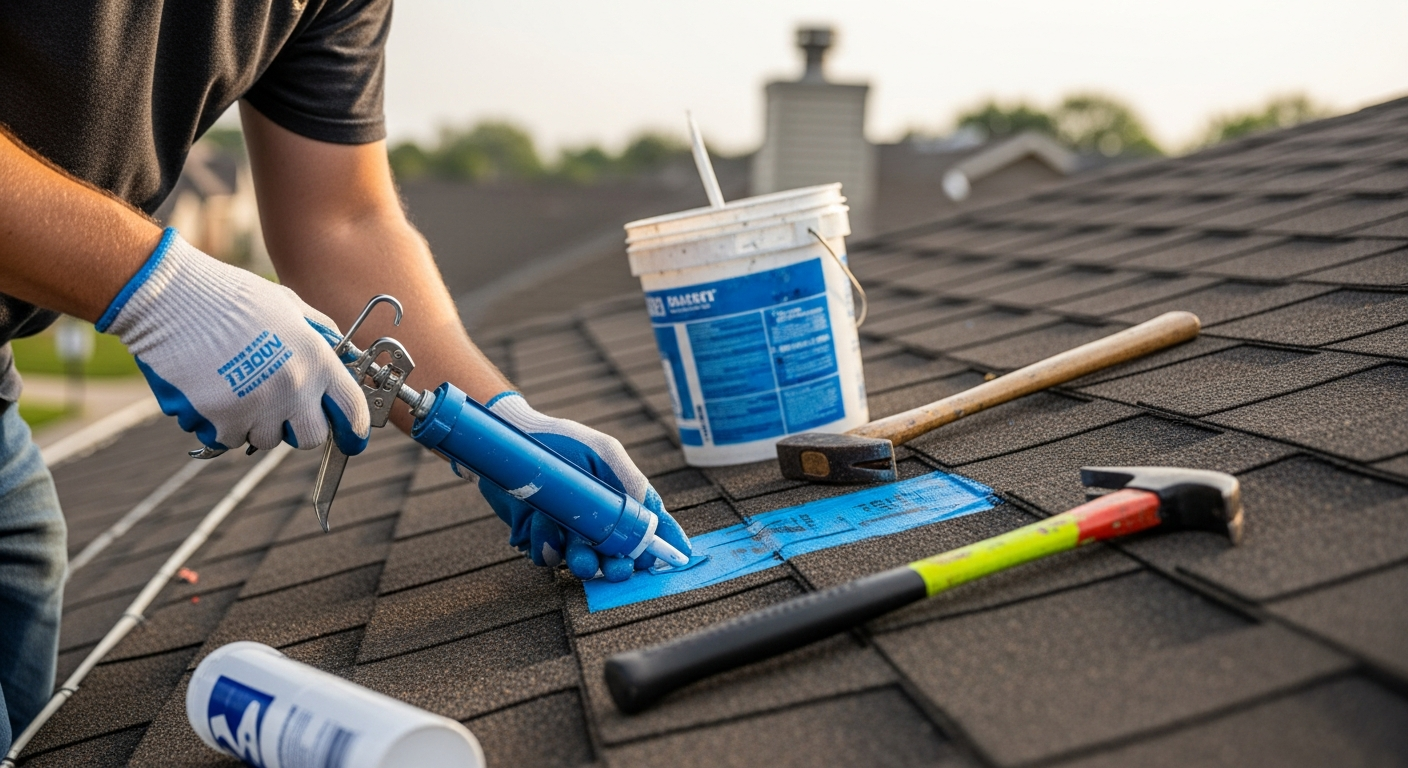
Water stains on ceilings represent the visible tip of an active leak, but Trill Roofing’s emergency assessments reveal earlier warning signs Troy homeowners often miss during severe weather. Listen for dripping sounds in walls or attic spaces, which indicate water has found entry points but hasn’t yet saturated drywall enough to show staining.
Check for water running down interior walls near windows or doors on upper floors. This often signals compromised flashing around dormers or roof-to-wall connections common in Troy’s suburban architecture. Andy Pfleger’s crew frequently finds that what appears to be window leaks actually originate from roof penetrations 10-15 feet away, with water following interior framing before emerging at visible locations.
Temporary Roof Patch Severe Weather: Professional Emergency Response

Trill Roofing maintains emergency response protocols specifically designed for active storm conditions across Madison County. Andy Pfleger’s approach prioritizes interior damage control first, then exterior temporary protection once wind speeds drop below 40 mph – the safety threshold his Illinois-licensed crews follow during severe weather.
Their emergency response includes tarping compromised roof sections with 6-mil polyethylene sheeting secured with 2×4 battens, a technique that withstands follow-up storms common during Troy’s spring weather patterns. Unlike temporary patches homeowners attempt with roofing cement or hardware store tarps, Trill Roofing’s emergency protection extends 3 feet beyond visible damage to address hidden water entry points.
One recent emergency call to a home in Troy’s Autumn Creek subdivision involved a chimney flashing failure during a severe thunderstorm producing 65 mph winds. Andy’s crew responded within 90 minutes, installed emergency tarping that protected the home through three additional storm systems, and completed permanent repairs once weather conditions stabilized. The homeowner’s quick documentation and professional emergency response prevented an estimated $8,000 in interior water damage.
Storm Damage Roof Repair Troy: Long-Term Solutions
Emergency roof leak repair Troy IL situations require permanent solutions that address both immediate damage and underlying vulnerabilities. Trill Roofing’s post-storm assessments in Troy consistently reveal that successful emergency patches prevent secondary damage, but comprehensive repairs must account for the area’s specific weather patterns and building characteristics.
Andy Pfleger’s team documents that homes in Troy’s newer developments like Crosswinds and Meridian Village benefit from upgraded flashing systems and impact-resistant shingles that better withstand the hail events Madison County experiences 8-12 times annually. Their permanent repair approach includes installing GAF Timberline HDZ shingles with StrikeGuard technology, designed specifically for Midwest storm conditions.
For Troy homeowners dealing with emergency leaks, understanding that temporary solutions buy time for proper assessment and permanent repair prevents the cycle of recurring problems. Professional storm damage repair addresses not just visible damage but the structural integrity of roof systems under stress from Illinois weather patterns.
The spring storm season in Troy typically runs from March through June, making this the optimal time for comprehensive roof inspections and preventive repairs. Trill Roofing’s roof repair services include detailed assessments that identify potential failure points before emergency situations develop.
Frequently Asked Questions

How quickly should I call for emergency roof leak repair Troy IL during a storm?
Contact a licensed roofer immediately after discovering a leak, even during active storms. Trill Roofing maintains 24/7 emergency response and can provide guidance over the phone for immediate damage control while dispatching crews once wind speeds allow safe roof access. Waiting until storms pass often means 12-24 hours of additional water intrusion and higher repair costs.
What temporary roof patch severe weather materials should Troy homeowners keep on hand?
Keep heavy-duty tarps (minimum 6-mil thickness), 2×4 lumber pieces for battens, and roofing nails for emergency protection. However, avoid climbing on wet or damaged roofs during storms – focus on interior water collection and contact professionals for exterior temporary repairs. Trill Roofing’s emergency crews have proper safety equipment and experience working in severe weather conditions.
Does homeowner’s insurance cover emergency roof leak repair in Troy Illinois?
Most homeowner’s policies cover sudden storm damage, but document everything with photos and timestamps. Contact your insurance company within 24-48 hours of discovering damage, and keep receipts for emergency repairs and water damage mitigation. Trill Roofing coordinates directly with major insurance carriers including State Farm and Allstate to streamline claims processing for Troy area homeowners.
Check out Which Roofing Company in Madison County, IL Is Right for…
Check out Siding Installation & Repair Services for Madison County…
Read our guide to Gutter Installation & Repair Services in Madison County &…
Check out Spring Roof Inspection Checklist for St. Louis Homeowners
Related article: Brighton, IL Homes: How to Spot Hidden Siding Dama
Key takeaways
- Emergency Roof Leak Repair Troy IL: Understanding Water Entry Points: Most homeowners assume roof leaks during heavy rain Troy storms come from missing shingles, but Andy Pfleger’s emergency calls reveal a different pattern.
- Troy Illinois Storm Patterns and Roof Vulnerability: Troy’s location in the Mississippi River floodplain creates unique challenges for roof leaking during heavy rain Troy events.
- What to Do Roof Leak Storm Illinois: Warning Signs During Active Weather: Water stains on ceilings represent the visible tip of an active leak, but Trill Roofing’s emergency assessments reveal earlier warning signs Troy homeowners often miss during severe weather.
- Temporary Roof Patch Severe Weather: Professional Emergency Response: Trill Roofing maintains emergency response protocols specifically designed for active storm conditions across Madison County.
- Storm Damage Roof Repair Troy: Long-Term Solutions: Emergency roof leak repair Troy IL situations require permanent solutions that address both immediate damage and underlying vulnerabilities.
- Frequently Asked Questions: Contact a licensed roofer immediately after discovering a leak, even during active storms.
Is Trill Roofing licensed and insured in Illinois?
Yes. Trill Roofing holds Illinois roofing contractor license #104.020330 through IDFPR and carries general liability and workers compensation insurance.
- An IDFPR license number you can verify online before work starts
- A current general liability insurance certificate
- Workers compensation coverage for the crew on the roof
- A written, itemized estimate rather than a verbal number
Does Trill Roofing offer free roof inspections?
Yes. Roof inspections are free and produce a written report with photos and a prioritized repair list. A standard inspection documents:
- Shingle condition, including granule loss, curling, and missing shingles
- Flashing at chimneys, sidewalls, valleys, and pipe boots
- Attic ventilation balance between intake and exhaust
- Gutters and downspouts, including separation from the fascia
What areas does Trill Roofing serve?
Trill Roofing works out of 2705 St Ambrose Dr in Godfrey, IL and serves Madison County and the Riverbend with no trip surcharge inside the primary service area:
- Godfrey, Alton, Bethalto, and Brighton
- Edwardsville, Glen Carbon, Maryville, and Troy
- Wood River, East Alton, Roxana, and Hartford
- Jerseyville, Grafton, Elsah, and Cottage Hills
- Collinsville, Granite City, Hamel, Marine, and Worden
What shingle brands does Trill Roofing install?
Trill Roofing installs GAF, CertainTeed, and Owens Corning shingles, including their Class 4 impact-resistant lines, and is a GAF-listed contractor.
What is included in a Trill Roofing written estimate?
Every written estimate itemizes materials, labor, and any add-ons, so the number in the proposal is the number on the invoice.